
Name Keiji Fukuda | Role Physician | |
 | ||
Education namespace:The University of Vermont College of Medicine, Oberlin College | ||
Opening Remarks- Keiji Fukuda
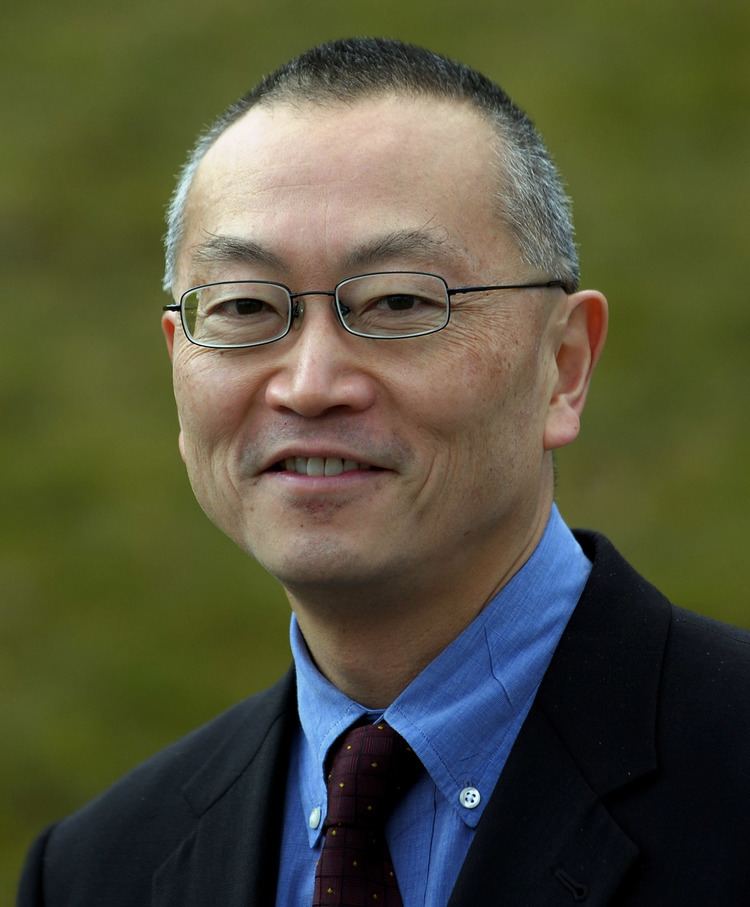
Keiji Fukuda (福田 敬二, born c.1954) is an American physician with expertise in influenza epidemiology. In March 2009, Fukuda was appointed Assistant Director-General for Health, Security and Environment ad interim for the World Health Organization (WHO), and he held this position from September 2010 to November 2016. The media have referred to him as the WHO "flu chief" during the 2009 swine flu outbreak. Fukuda came to the WHO in 2005. He first worked as Coordinator of the Global Influenza Program from 2006 to 2008 and was then appointed its Director. Before joining the WHO in 2005, Fukuda was Chief of the Epidemiology Unit, Influenza Branch at the U.S. Centers for Disease Control and Prevention. After retiring from the WHO in 2016, he joined the University of Hong Kong as a Professor.
Contents
- Opening Remarks Keiji Fukuda
- WHO Antimicrobial Resistance AMR Interview at World Health SocialGood
- Biography
- Publications
- References
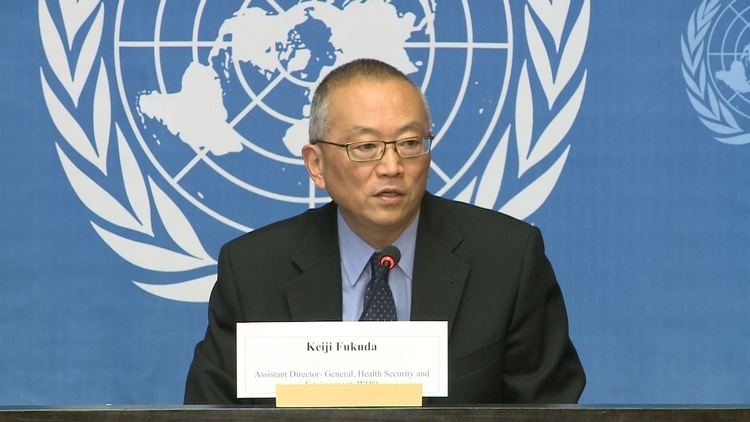
WHO: Antimicrobial Resistance (AMR) - Interview at "World Health +SocialGood"
Biography
Fukuda's parents were physicians. His father immigrated from Japan to Vermont to complete an anesthesia fellowship there, and stayed on to work at the Barre hospital.
Keiji Fukuda attended Oberlin College for his BA, which was temporarily interrupted by a nine-month backpacking excursion through Asia, the Middle East, and Europe. He studied medicine at the University of Vermont College of Medicine, completed in 1983. Part-way through medical school, he spent six months working with indigenous tribes in southern India, which helped further his interest in international health. He went on to complete his internal medicine residency at Mount Zion Hospital in San Francisco, and then a Master of Public Health at University of California, Berkeley. For one year, he worked in San Francisco Bay Area in clinics that focus on leprosy and tuberculosis, and then moved to Atlanta, GA where he spent two years studying in the Epidemiology Intelligence Service training program at the CDC.
In 1994 he led a committee that revised the definition of chronic fatigue syndrome, which has since become the most widely used clinical and research definition of the illness. He has focused on influenza since 1996, leading teams that investigated outbreaks of avian influenza and of SARS.
On April 28, 2009 he pointed out that it was already too late to contain the 2009 swine flu outbreak.
He currently resides in Hong Kong.