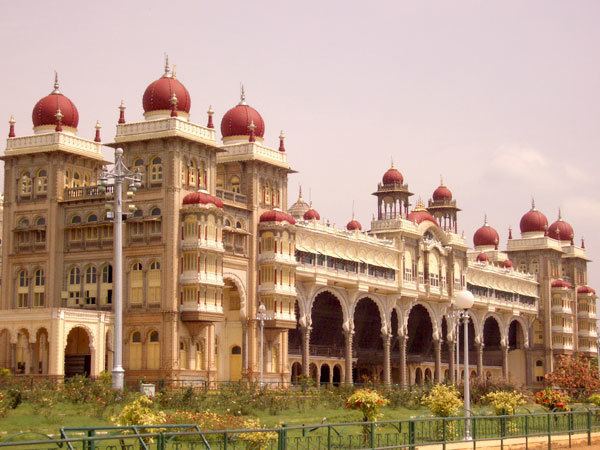
The Palace of Mysore (also known as the Amba Vilas Palace) is a historical palace situated in the city of Mysore in Karnataka, southern India. It is the official residence and seat of the Wodeyars - the Maharajas of Mysore, the former royal family of Mysore, which ruled the princely state of Mysore from 1399 to 1950. The palace also houses two durbar halls (ceremonial meeting halls of the royal court) and incorporates a mesmerizing and gigantic array of courtyards, gardens, and buildings. The palace is located in the central region of inner Mysore, facing the Chamundi Hills eastward.
#2 Jaisalmer Palace (Rajmahal)Mysore is commonly described as the City of Palaces, for, there are about seven palaces inclusive of this; however, the term Mysore Palace refers specifically to the one within the Old Fort. Mysore Palace is now one of the most famous tourist attractions in India, after the Taj Mahal, and has more than 3 million visitors annually.
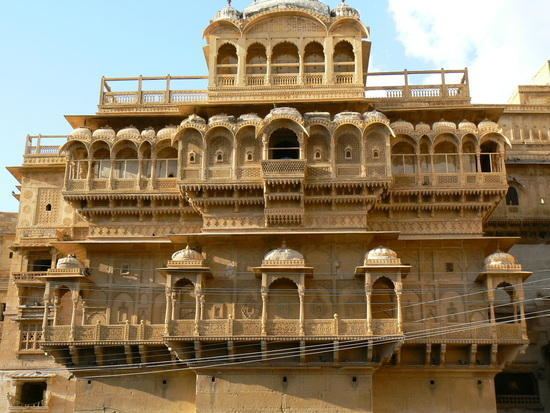
Also known as Rajmahal, this erstwhile royal residence in Jaisalmer was constructed around 1500. With well-kept grounds and fully renovated sections the palace draws a steady stream of visitors.
#3 Luxembourg Palace
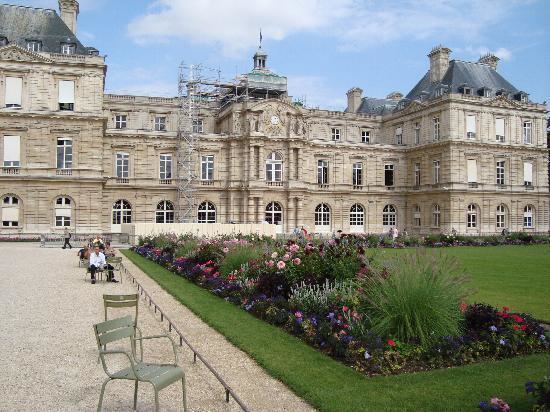
The Luxembourg Palace is located at 15 rue de Vaugirard in the 6th arrondissement of Paris. It was originally built (1615–1645) to the designs of the French architect Salomon de Brosse to be the royal residence of the regent Marie de Médicis, mother of Louis XIII of France. After the Revolution it was refashioned (1799–1805) by Jean Chalgrin into a legislative building and subsequently greatly enlarged and remodeled (1835–1856) by Alphonse de Gisors. Since 1958 it has been the seat of the French Senate of the Fifth Republic.
#4 Laxmi Vilas Palace,VadodaraOn the south side of the palace, the formal Luxembourg Garden presents a 25-hectare green parterre of gravel and lawn populated with statues and provided with large basins of water where children sail model boats. The Musée du Luxembourg occupies the east wing of the palace.
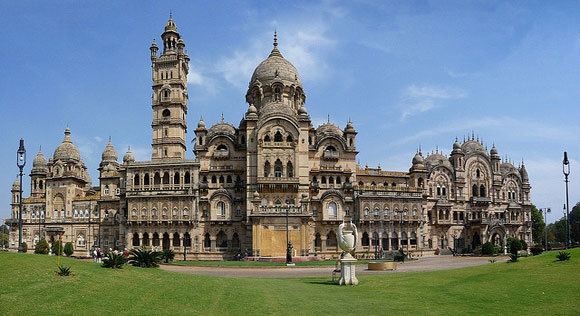
The term Maharaja Palace actually refers to a series of palaces in Vadodara,Gujarat, India, constructed since the Gaekwad a prominent Maratha family started ruling the Baroda State. The first one was a building known as the Sarkar Wada. This building, not really a palace, was given up for the Nazarbaug Palace built in old classical style.
#5 Palace of versaillesAfter this the Lakshmi Vilas Palace, an extravagant building of the Indo-Saracenic school, was built by Maharaja Sayajirao Gaekwad III in 1890 at a cost of GBP180,000. Major Charles Mant was the architect.
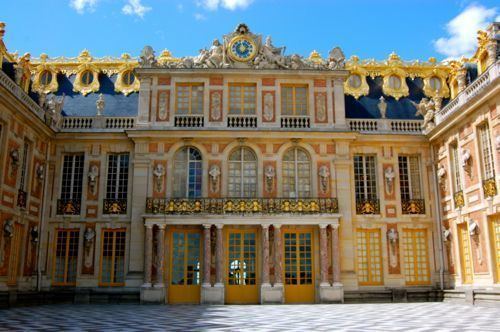
The Palace of Versailles or simply Versailles, is a royal château in Versailles in the Île-de-France region of France. In French, it is known as the Château de Versailles.
#6 Jag Mandiror Lake Garden PalaceWhen the château was built, Versailles was a country village; today, however, it is a wealthy suburb of Paris, some 20 kilometres southwest of the French capital. The court of Versailles was the center of political power in France from 1682, when Louis XIV moved from Paris, until the royal family was forced to return to the capital in October 1789 after the beginning of the French Revolution. Versailles is therefore famous not only as a building, but as a symbol of the system of absolute monarchy of the Ancien Régime.
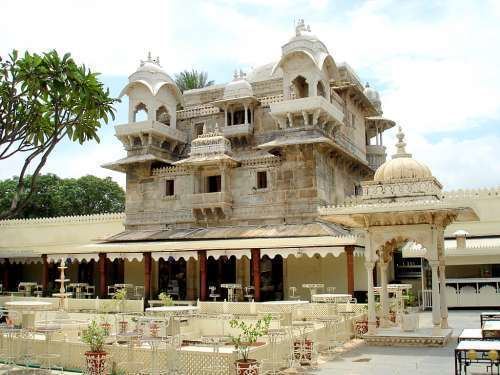
#7 The PenaNational PalaceJag Mandir is a palace built on an island in the Lake Pichola. It is also called the "Lake Garden Palace". The palace is located in Udaipur city in the Indian state of Rajasthan. Its construction is credited to three Maharanas of the Sisodia Rajputs of Mewar kingdom. The construction of the palace was started in 1551 by Maharana Amar Singh, continued by Maharana Karan Singh (1620–1628) and finally completed by Maharana Jagat Singh I (1628–1652). It is named as "Jagat Mandir" in honour of the last named Maharana Jagat Singh. The royal family used the palace as a summer resort and pleasure palace for holding parties. The palace served as a refuge to asylum seekers on two separate occasions.
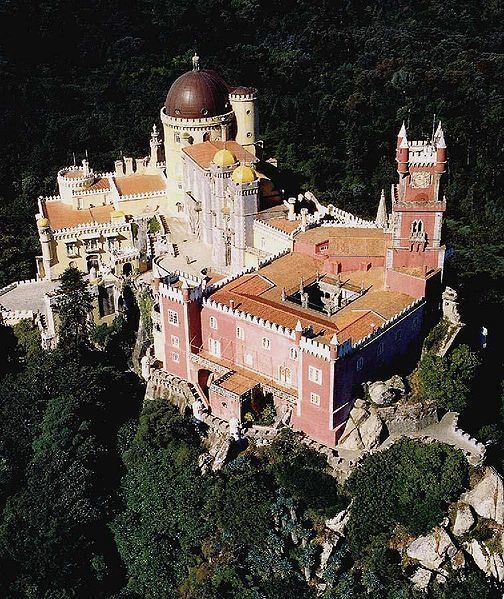
Built in 1842 by King Ferdinand II, the Pena National Palace in Portugal is the oldest European castle of the Romantic era. The palace was built on the ruins of a monastery severely damaged in the Great Lisbon Earthquake of 1755. Today, with its unique red
The Pena National Palace is a Romanticist palace in São Pedro de Penaferrim, in the municipality of Sintra, Portugal. The palace stands on the top of a hill above the town of Sintra, and on a clear day it can be easily seen from Lisbon and much of its metropolitan area. It is a national monument and constitutes one of the major expressions of 19th-century Romanticism in the world. The palace is a UNESCO World Heritage Site and one of the Seven Wonders of Portugal. It is also used for state occasions by the President of the Portuguese Republic and other government officials.
#8 City Palaceof Jaipur
City Palace, Jaipur, which includes the Chandra Mahal and Mubarak Mahal palaces and other buildings, is a palace complex in Jaipur, the capital of the Rajasthan state, India. It was the seat of the Maharaja of Jaipur, the head of the Kachwaha Rajput clan. The Chandra Mahal palace now houses a museum but the greatest part of it is still a royal residence. The palace complex, which is located northeast of the centre of the grid patterned Jaipur city, incorporates an impressive and vast array of courtyards, gardens and buildings.
#9 Palace of Trier, GermanyThe palace was built between 1729 and 1732, initially by Sawai Jai Singh II, the ruler of Amber. He planned and built the outer walls, and later additions were made by successive rulers right up to the 20th century. The credit for the urban layout of the city and its structures is attributed to two architects namely, Vidyadar Bhattacharya, the chief architect in the royal court and Sir Samuel Swinton Jacob, apart from the Sawai himself who was a keen architectural enthusiast. The architects achieved a fusion of the Shilpa Shastra of Indian architecture with Rajput, Mughal and European styles of architecture.
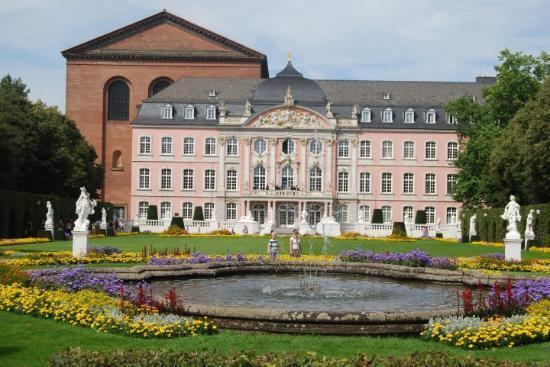
The Electoral Palace located adjacent to the Basilica is considered one of the most beautiful rococo palaces in the world. The wonderful rococo staircase in the south wing, a creation by the artists Seiz and Tietz, is particularly worth seeing.
# 10Dolmabahçe Palace
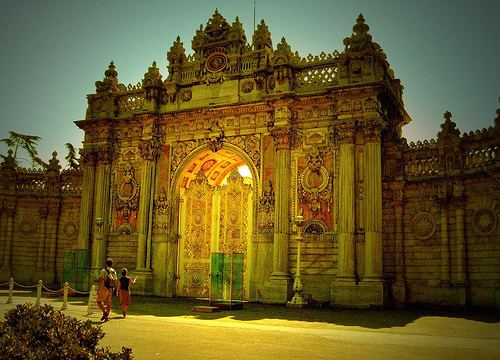
#11 ThePalace of Queluz.Dolmabahçe Palace located in the Be?ikta? district of Istanbul, Turkey, on the European coastline of the Bosphorus strait, served as the main administrative center of the Ottoman Empire from 1856 to 1922, apart from a 22-year interval (1887–1909) in which Y?ld?z Palace was used.
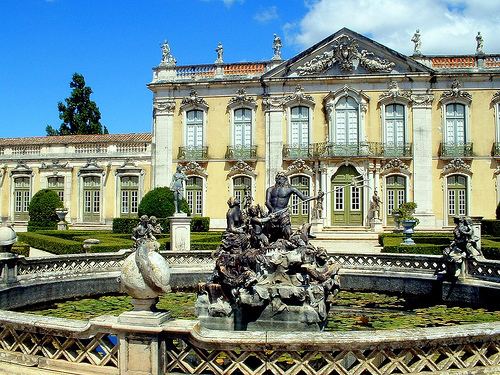
The Queluz National Palace (Portuguese: Palácio Nacional de Queluz is a Portuguese 18th-century palace located at Queluz, a freguesia of the modern-day Sintra Municipality, in the Lisbon District. One of the last great Rococo buildings to be designed in Europe, the palace was conceived as a summer retreat for Dom Pedro of Braganza, later to become husband and then king consort to his own niece, Queen Maria I. It served as a discreet place of incarceration for Queen Maria as her descent into madness continued in the years following Dom Pedros death in 1786. Following the destruction by fire of the Ajuda Palace in 1794, Queluz Palace became the official residence of the Portuguese prince regent, John VI, and his family and remained so until the Royal Family fled to the Portuguese colony of Brazil in 1807 following the French invasion of Portugal.
Work on the palace began in 1747 under the architect Mateus Vicente de Oliveira. Despite being far smaller, the palace is often referred to as the Portuguese Versailles. From 1826, the palace slowly fell from favour with the Portuguese sovereigns. In 1908, it became the property of the state. Following a serious fire in 1934, which gutted the interior, the palace was extensively restored, and today is open to the public as a major tourist attraction.
One wing of the palace, the Pavilion of Dona Maria, built between 1785 and 1792 by the architect Manuel Caetano de Sousa, is now a guest house allocated to foreign heads of state visiting Portugal.
#12 Potala Palace
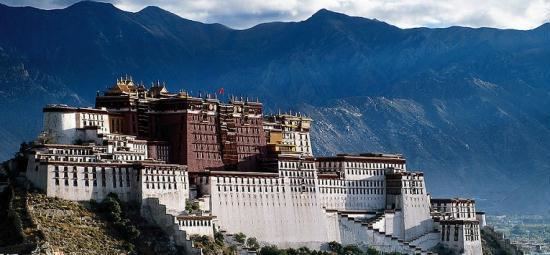
The Potala Palace in Lhasa, Tibet Autonomous Region, China, was the chief residence of the Dalai Lama until the 14th Dalai Lama fled to India during the 1959 Tibetan uprising. It is now a museum and UNESCO World Heritage Site.
The palace is named after Mount Potalaka, the mythical abode of Chenresig or Avalokitesvara. Lozang Gyatso, the Great Fifth Dalai Lama, started its construction in 1645 after one of his spiritual advisers, Konchog Chophel (died 1646), pointed out that the site was ideal as a seat of government, situated as it is between Drepung and Sera monasteries and the old city of Lhasa.It may overlay the remains of an earlier fortress, called the White or Red Palace, on the site built by Songtsen Gampo in 637.
The building measures 400 metres east-west and 350 metres north-south, with sloping stone walls averaging 3 m. thick, and 5 m. (more than 16 ft) thick at the base, and with copper poured into the foundations to help proof it against earthquakes. Thirteen stories of buildings – containing over 1,000 rooms, 10,000 shrines and about 200,000 statues – soar 117 metres (384 ft) on top of Marpo Ri, the "Red Hill", rising more than 300 m (about 1,000 ft) in total above the valley floor.
Tradition has it that the three main hills of Lhasa represent the "Three Protectors of Tibet." Chokpori, just to the south of the Potala, is the soul-mountain (bla-ri) of Vajrapani, Pongwari that of Manjushri, and Marpori, the hill on which the Potala stands, represents Chenresig or Avalokiteshvara.
#13 Massandra Palace, Crimea, Ukraine
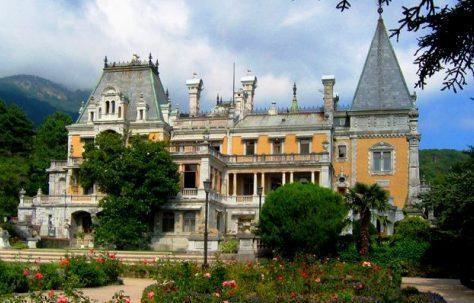
Massandra or Masandra is an urban-type settlement in the Yalta municipality of the Autonomous Republic of Crimea, a territory recognized by a majority of countries as part of Ukraine and incorporated by Russia as the Republic of Crimea. Population: 8,571 (2013 population estimate)
Occupying the spot of an ancient Greek settlement Masandra was acquired by Counts Potocki in 1783.
In the mid-19th century, it passed to Prince Vorontsov Jr, whose father was the governor of New Russia. Enraptured by a picturesque setting, Vorontsov in 1881 engaged a team of French architects to design for him a château in the Louis XIII style. He died the following year and construction work was suspended until 1889, when the messuage was purchased by Alexander III of Russia. The tsar asked architect Maximilian Messmacher to finish the palace for his own use but he did not live to see it completed in 1900. During the Soviet years, the palace was employed by Joseph Stalin as his dacha.
Today, Masandra is known for its agricultural production, namely fortified wines.
.jpg)