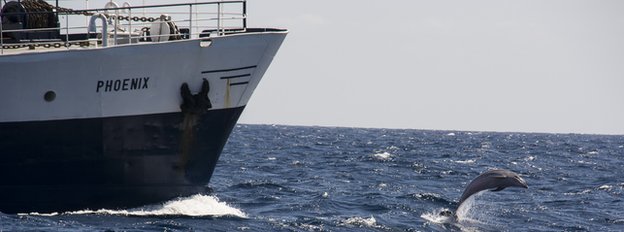
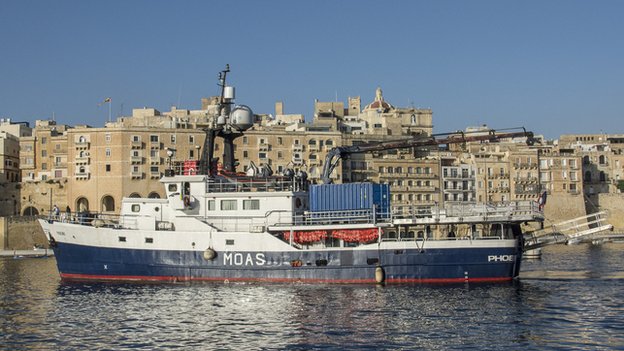
A philanthropist couple have launched what they say is the worlds first privately funded vessel to help migrants in trouble at sea
Last summer, Regina Catrambone and her husband Chris were on board a yacht cruising around the Mediterranean - but the idyllic holiday scene was interrupted when they spotted something in the sea.
"My husband and I were on the deck and we saw a winter jacket floating in the water, like a ghost," says Regina.
They asked the captain how it ended up there. "His face became very dark and he said probably the person who was wearing it is not with us any more. That started to trigger our attention."
They realised it had probably belonged to one of the thousands of migrants who try to cross the Mediterranean to reach Europe - 1,889 have died in these waters since the start of the year, 1,600 of them since the beginning of June, according to the UN Refugee Agency UNHCR.
The defining moment for the couple came soon after, when they saw Pope Francis on television, calling on entrepreneurs to help those in need.
"We looked at each other, me and my husband, and we said: Lets do something. From this moment came the idea of buying a boat and doing something in the Mediterranean, where people are dying every day."
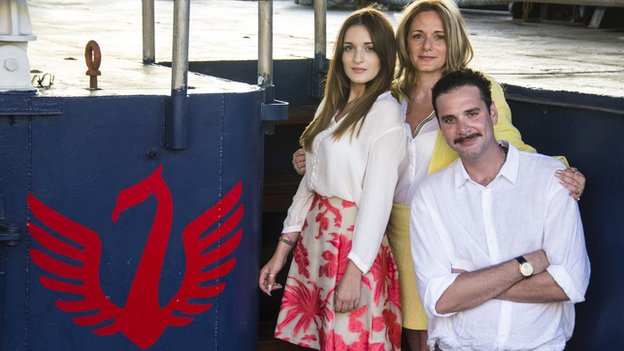
By October, when the Catrambones heard how more than 360 migrants had drowned near the Italian island of Lampedusa, they were determined to turn their plans into action.
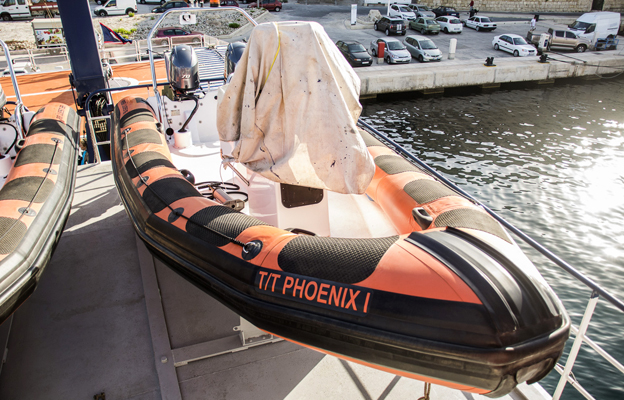
Since then the couple, who are in their 30s, have drawn deeply from their own pockets to fund a highly-sophisticated ship, the Phoenix, based in Malta, where they live. It has dinghies and two state-of-the art drones which they are using to find and help migrants trying to enter Europe by boat, mostly from Africa.
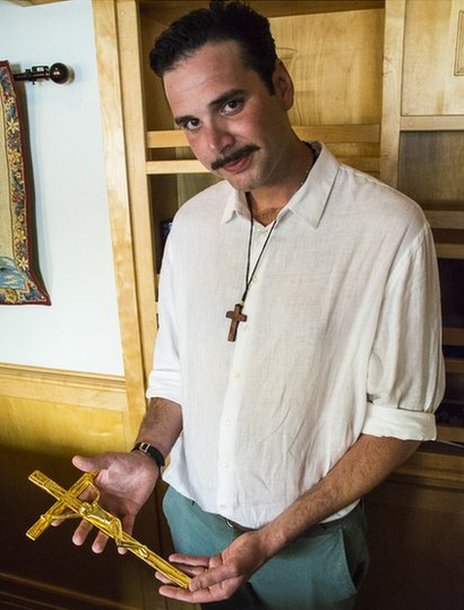
The service was "very important for my husband and me, and for the crew to have spiritual support before they leave, because they will be weeks at sea so they will need Gods help," says Regina, who is Italian.
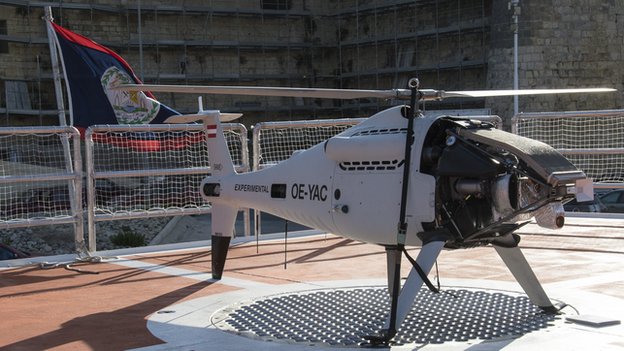
Her husband Chris, who is from New Orleans in the US, proudly shows off the custom-made flight deck, home to two Schiebel S-100 camcopters, or drones, which MOAS has leased.
He explains how their HD-quality, night vision and thermal imaging cameras are powerful enough to read a piece of paper in a passengers hand from the air.
"We are making history in many ways by being the first civilian ship to use such grand technology. We hope that this is going to change the environment for rescue at sea. Were innovators here. Were trying to do something that no-one else has been able to do. Weve put our money where our mouth is," he says
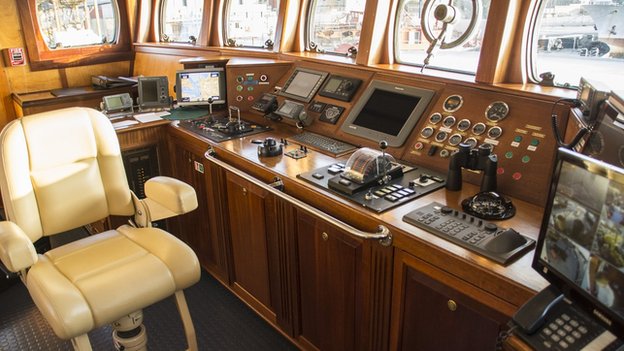
When the ship comes across a migrant boat in international waters, the crew will contact the nearest authorities. "We will communicate the position of the boat in distress to the authority and we will wait for what they tell us to do," says Regina.
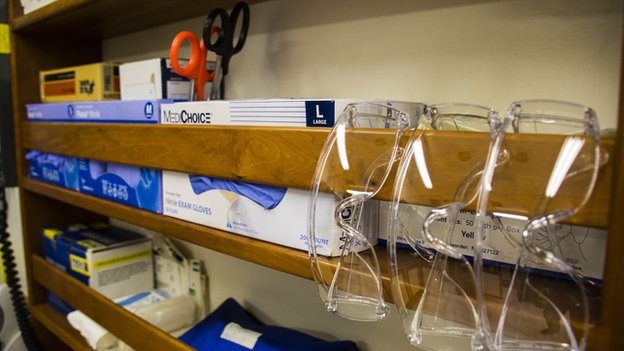
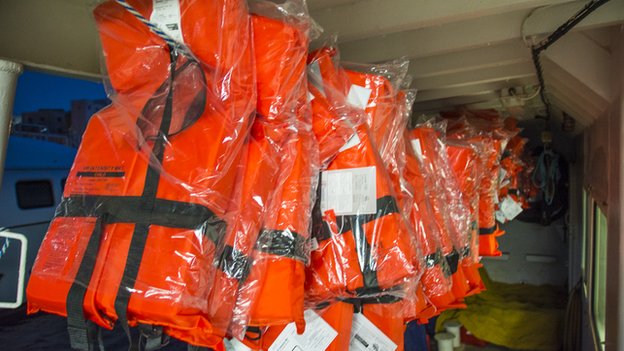
While they wait for instructions, they will use the dinghies to approach the boats, pass over food, water and lifejackets and offer medical assistance - the Phoenix has a paramedic on board and also has a well-equipped medical bay.
The entire project, the couple say, has cost them "millions" with the total running costs of the ships initial 60-day mission being 2m euros, (£1.59m, $2.64m) which they say is the extent of their budget.