
Here is a list of the oldest living organism usually defined as having a longer life-span than any other known individual such as the Methuselah tree longevity record-holders such as Jeanne Calment who is the longest living human being

Jeanne Calment
Biological immortality
If the mortality rate of a species does not increase after maturity, the species does not age and is said to be biologically immortal.
There are many examples of plants and animals for which the mortality rate actually decreases with age, for all or part of the life cycle.
If the mortality rate remains constant, the rate determines the mean life-span. The life-span can be long or short, even though the species technically "does not age".

Sanicula is a herb, native to Europe and the Americas, which lives about seventy years in the wild. Old saniculae do not die at a higher rate than younger ones.
Sea urchins and some clams have relatively high rates of mortality in the ocean, but mortality does not appear to increase with age.
Hydras were observed, in a study published in the journal Experimental Gerontology, for four years without any increase in mortality rate.
Other species have been observed to regress to a larval state and regrow into adults multiple times.
The Hydrozoan species Turritopsis dohrnii is capable of cycling from a mature adult stage to an immature polyp stage and back again. This means that there may be no natural limit to its life-span.
However, no single specimen has been observed for any extended period, and it is impossible to estimate the age of a specimen.
The larvae of carrion beetles have evolved to undergo a degree of "reversed development" when starved, and later to grow back to the previously attained level of maturity. The cycle can be repeated many times.
Revived into activity after stasis
Various claims have been made about reviving bacterial spores to active metabolism after millions of years.
There are claims of spores from amber being revived after forty million years,and spores from salt deposits in New Mexico being revived after 240,000,000 years.
These claims have been made by credible researchers, but are not universally accepted.
In a related find, a scientist was able to coax thirty-four-millennium-old salt-captured bacteria to reproduce and his results were duplicated at a separate independent laboratory facility.
A seed from the previously extinct Judean date palm was revived and managed to sprout after nearly 2,000 years.
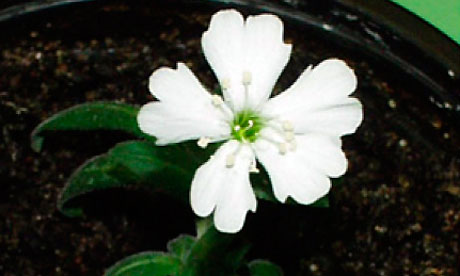
Silene stenophylla was grown from fruit found in an ancient squirrels cache. The germinated plants bore viable seeds. The fruit was dated to be 31,800 years old ± 300 years.
In 1994, a seed from a sacred lotus (Nelumbo nucifera), dated at roughly 1,300 years old ± 270 years, was successfully germinated.
Clonal plant colonies
As with all long-lived plant and fungal species, no individual part of a clonal colony is alive (in the sense of active metabolism) for more than a very small fraction of the life of the entire colony.
Some clonal colonies may be fully connected via their root systems, while most are not actually interconnected, but are genetically identical clones which populated an area through vegetative reproduction. Ages for clonal colonies, often based on current growth rates, are estimates.

Pando is a Populus tremuloides (Quaking Aspen) tree or clonal colony that has been estimated at 80,000 years old.Unlike many other clonal "colonies" the above-ground trunks remain connected to each other via a single massive subterranean root system.
Whether it is to be considered a single tree is disputed, as it depends on ones definition of an individual tree.
The Jurupa Oak colony is estimated to be at least thirteen millennia old, with other estimates ranging from five to thirty millennia.
A huge colony of the sea grass Posidonia oceanica in the Mediterranean Sea is estimated to be between 12,000 and 200,000 years old. The maximum age is theoretical, as the region it occupies was above water at some point between 10,000 and 80,000 years ago.

Kings Lomatia in Tasmania: The sole surviving clonal colony of this species is estimated to be at least 43,600 years old.
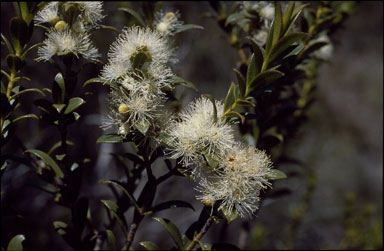
Eucalyptus recurva clones in Australia are claimed to be thirteen millennia old.
King Clone is a creosote bush (Larrea tridentata) in the Mojave desert estimated at 11,700 years old.
Another creosote bush has been said to be 12,150 years old, but this is as yet unconfirmed.
A Huon Pine colony on Mount Read, Tasmania is estimated at 10,000 years old, with individual specimens living to over 3,000 years.
Old Tjikko, a Norway Spruce in Sweden, is a tree on top of roots that have been carbon dated to 9,550 years old. The tree is part of a clonal colony that was established at the end of the last ice age.
Discovered by Professor Leif Kullman, at Umeå University, the tree is located in the county of Dalarna in Sweden. Old Tjikko is small, only 5 metres (16 ft) in height.
A box huckleberry bush in Pennsylvania is thought to be perhaps eight millennia old.
An individual of the fungus species Armillaria solidipes in the Malheur National Forest is thought to be between 2,000 and 8,500 years old.
It is thought to be the worlds largest organism by area, at 2,384 acres (965 hectares).
Individual microorganisms
Some endoliths have extremely long lives. In August 2013 researchers reported evidence of endoliths in the ocean floor with a generation time of ten millennia.
These are slowly metabolizing, not in a dormant state.
Individual plant specimens
A Great Basin Bristlecone Pine (Pinus longaeva) is measured by ring count to be 5064 years old.
This is the oldest known tree in North America, and the oldest known living individual tree in the world.
Llangernyw Yew, the oldest individual tree in Europe and second or third oldest individual tree in the world.
Believed to be aged between 4,000 years and 5,000 years old, this ancient yew (Taxus baccata) is in the churchyard of the village of Llangernyw in North Wales.
Fortingall Yew, an ancient yew (Taxus baccata) in the churchyard of the village of Fortingall in Perthshire, Scotland; one of the oldest known individual trees in Europe. Various estimates have put its age at between 2000 and 5000 years, although these days it is believed to be at the lower end of this range.
Fitzroya cupressoides is the species with the second oldest verified age, a specimen in Chile being measured by ring count as 3,622 years old.
A Sacred Fig (Ficus religiosa), the Jaya Sri Maha Bodhi in Anuradhapura, Sri Lanka is 2,300 years old (planted in 288 BC).
It is the oldest known flowering plant and the oldest known living to date human-planted tree in the world.
A specimen of Lagarostrobos franklinii in Tasmania is thought to be about 2000 years old.
Numerous olive trees are purported to be 2000 years old or older.
An olive tree in Ano Vouves, Crete, claiming such longevity, has been confirmed on the basis of tree ring analysis.
J?mon Sugi, the cryptomeria naturally grown in Yakushima Island, Kagoshima, Japan, more than 2,170 to 7,200 years old.
Great sugi of Kayano, the cryptomeria deemed planted by humans in Kaga, Ishikawa, Japan, estimated age of 2,300 years in 1928.
Welwitschia is a monotypic genus of gymnosperm plant, composed solely of the distinct Welwitschia mirabilis.
It is the only genus of the family Welwitschiaceae, in the order Welwitschiales, in the division Gnetophyta.
The plant is considered a living fossil. Radiocarbon dating has confirmed that there are many individuals which have lived longer than 1000 years, and some are suspected to be older than 2000 years.
Yareta is a tiny flowering plant in the family Apiaceae native to South America, occurring in the Puna grasslands of the Andes in Peru, Bolivia, the north of Chile and the west of Argentina at between 3,200 and 4,500 metres altitude. Some yaretas could be up to 3,000 years old.
Terrestrial animals

Adwaita , an Aldabra Giant Tortoise died at an estimated age of 250 in March 2006 in Alipore Zoo, Kolkata, India.
If verified, it will have been the oldest terrestrial animal in the world.
The tuatara can live well above 100 years. Henry, a tuatara at the Southland Museum in New Zealand, mated for the first time at the age of 111 years in 2009 with an 80-year-old female and fathered 11 baby tuatara.
Tui Malila, a Radiated tortoise, died at an age of 188 years in May 1965, at the time the oldest verified vertebrate.
Jonathan, a Seychelles giant tortoise living on the island of Saint Helena, is reported to be about 182 years old, and may therefore be the oldest currently living terrestrial animal if the claim is true.
Harriet, a Galápagos tortoise, died at the age of 175 years in June 2006.
Timothy, a Greek Tortoise, died at an age of 160 years in April 2004.
The oldest living human was Jeanne Calment from France, who died at the age of 122 years, 164 days.
A female Blue-and-yellow Macaw named Charlie was reportedly hatched in 1899, which would make her 111 years old, as of 2010.
Her age has not been independently confirmed and the claim may not be reliable. She is claimed to have formerly belonged to Winston Churchill, but Churchills daughter denies the claim.

Lin Wang , an Asian elephant was the oldest elephant in the Taipei Zoo. He was born in 1917 and died in February 2003 at 86 years, surpassing the previous record of 84. Normally elephants live up to 50 years, while their maximum life-span is generally estimated at 70.
A Greater Flamingo named Greater died at Adelaide Zoo in January 2014 at the age of at least 83.
Thaao, the Andean condor died at the age of 80.
Cookie, a Major Mitchells Cockatoo resident at Brookfield Zoo, Illinois, US is the oldest member of his species in captivity, at a verified age of 81.
A female Laysan Albatross named Wisdom successfully hatched a chick at Midway Atoll in February 2014, at the age of 63. As of 2014, she is the oldest known wild bird in the world.
The oldest living horse on record was named Ol Billy. Bill was allegedly born in the year 1760 in London, England. Bill died in 1822 at the age of sixty-two years. Henry Harrison, an occupant of London during the time, had also allegedly known Ol Billy for fifty-nine years until Bills death.
Creme Puff, a cat owned by Jake Perry of Austin, Texas, was born on August third, 1967, and died on August sixth, 2005, - a total of thirty-eight years and three days.
Debby was the oldest polar bear on record when she died in 2008, at the age of forty-two years.
Aquatic animals
Some species of sponges in the ocean near Antarctica are thought to be ten millennia old.
Specimens of the black coral genus Leiopathes are among the oldest continuously living organisms on the planet: around 4,265 years old.
The giant barrel sponge Xestospongia muta is one of the longest-lived animals, with the largest specimens in the Caribbean estimated to be in excess of 2,300 years.
The black coral Antipatharia in the Gulf of Mexico may live more than 2000 years.
The Antarctic sponge Cinachyra antarctica has an extremely slow growth rate in the low temperatures of the Southern Ocean. One specimen has been estimated to be 1,550 years old.
A specimen, "Ming" of the Icelandic Cyprine Arctica islandica (also known as an ocean quahog), a mollusk, was found to have lived 507 years.
Another specimen had a recorded life span of 374 years.

Koi fish have reportedly lived more than 200 years, the oldest being Hanako, who died at an age of 226 years on July 7, 1977.
Orange roughy, also known as Deep Sea Perch, can live up to 156 years.
In recent times, the Russian malacologist Valeriy Zyuganov received world-wide attention after he determined the maximum life-span (210–250 years) of the freshwater pearl mussel (Margaritifera margaritifera).
The data of V.V. Zyuganov have been confirmed by Finnish malacologists and gained general acceptance.
Specimens of the Red Sea Urchin, Strongylocentrotus franciscanus, have been found to be over 200 years old.
The deep-sea hydrocarbon seep tubeworm Lamellibrachia luymesi (Annelida, Polychaeta) lives for more than 170 years.

Tardigrades, capable of cryptobiosis, have been shown to survive nearly 120 years in a dry state.
Geoduck, a species of saltwater clam native to the Puget Sound, have been known to live more than 160 years.
George the lobster was estimated to be approximately 140 years old by PETA in January 2009.
In 2012, a sturgeon was caught in a Wisconsin river that was estimated to be 125 years old.
An orca of the "Southern Resident Community" identified as J-2 or Granny is estimated to be the oldest orca in the entire community and is 103 years old, as of 2014.

A Swedish man claimed that a European Eel was 155 years old when it died in 2014. If correct, it would have been the worlds oldest, having been born in 1859.
Jeanne Calment
Biological immortality
If the mortality rate of a species does not increase after maturity, the species does not age and is said to be biologically immortal.
There are many examples of plants and animals for which the mortality rate actually decreases with age, for all or part of the life cycle.
If the mortality rate remains constant, the rate determines the mean life-span. The life-span can be long or short, even though the species technically "does not age".
Sanicula is a herb, native to Europe and the Americas, which lives about seventy years in the wild. Old saniculae do not die at a higher rate than younger ones.
Sea urchins and some clams have relatively high rates of mortality in the ocean, but mortality does not appear to increase with age.
Hydras were observed, in a study published in the journal Experimental Gerontology, for four years without any increase in mortality rate.
Other species have been observed to regress to a larval state and regrow into adults multiple times.
The Hydrozoan species Turritopsis dohrnii is capable of cycling from a mature adult stage to an immature polyp stage and back again. This means that there may be no natural limit to its life-span.
However, no single specimen has been observed for any extended period, and it is impossible to estimate the age of a specimen.
The larvae of carrion beetles have evolved to undergo a degree of "reversed development" when starved, and later to grow back to the previously attained level of maturity. The cycle can be repeated many times.
Revived into activity after stasis
Various claims have been made about reviving bacterial spores to active metabolism after millions of years.
There are claims of spores from amber being revived after forty million years,and spores from salt deposits in New Mexico being revived after 240,000,000 years.
These claims have been made by credible researchers, but are not universally accepted.
In a related find, a scientist was able to coax thirty-four-millennium-old salt-captured bacteria to reproduce and his results were duplicated at a separate independent laboratory facility.
A seed from the previously extinct Judean date palm was revived and managed to sprout after nearly 2,000 years.
Silene stenophylla was grown from fruit found in an ancient squirrels cache. The germinated plants bore viable seeds. The fruit was dated to be 31,800 years old ± 300 years.
In 1994, a seed from a sacred lotus (Nelumbo nucifera), dated at roughly 1,300 years old ± 270 years, was successfully germinated.
Clonal plant colonies
As with all long-lived plant and fungal species, no individual part of a clonal colony is alive (in the sense of active metabolism) for more than a very small fraction of the life of the entire colony.
Some clonal colonies may be fully connected via their root systems, while most are not actually interconnected, but are genetically identical clones which populated an area through vegetative reproduction. Ages for clonal colonies, often based on current growth rates, are estimates.
Pando is a Populus tremuloides (Quaking Aspen) tree or clonal colony that has been estimated at 80,000 years old.Unlike many other clonal "colonies" the above-ground trunks remain connected to each other via a single massive subterranean root system.
Whether it is to be considered a single tree is disputed, as it depends on ones definition of an individual tree.
The Jurupa Oak colony is estimated to be at least thirteen millennia old, with other estimates ranging from five to thirty millennia.
A huge colony of the sea grass Posidonia oceanica in the Mediterranean Sea is estimated to be between 12,000 and 200,000 years old. The maximum age is theoretical, as the region it occupies was above water at some point between 10,000 and 80,000 years ago.
Kings Lomatia in Tasmania: The sole surviving clonal colony of this species is estimated to be at least 43,600 years old.
Eucalyptus recurva clones in Australia are claimed to be thirteen millennia old.
King Clone is a creosote bush (Larrea tridentata) in the Mojave desert estimated at 11,700 years old.
Another creosote bush has been said to be 12,150 years old, but this is as yet unconfirmed.
A Huon Pine colony on Mount Read, Tasmania is estimated at 10,000 years old, with individual specimens living to over 3,000 years.
Old Tjikko, a Norway Spruce in Sweden, is a tree on top of roots that have been carbon dated to 9,550 years old. The tree is part of a clonal colony that was established at the end of the last ice age.
Discovered by Professor Leif Kullman, at Umeå University, the tree is located in the county of Dalarna in Sweden. Old Tjikko is small, only 5 metres (16 ft) in height.
A box huckleberry bush in Pennsylvania is thought to be perhaps eight millennia old.
An individual of the fungus species Armillaria solidipes in the Malheur National Forest is thought to be between 2,000 and 8,500 years old.
It is thought to be the worlds largest organism by area, at 2,384 acres (965 hectares).
Individual microorganisms
Some endoliths have extremely long lives. In August 2013 researchers reported evidence of endoliths in the ocean floor with a generation time of ten millennia.
These are slowly metabolizing, not in a dormant state.
Individual plant specimens
A Great Basin Bristlecone Pine (Pinus longaeva) is measured by ring count to be 5064 years old.
This is the oldest known tree in North America, and the oldest known living individual tree in the world.
Llangernyw Yew, the oldest individual tree in Europe and second or third oldest individual tree in the world.
Believed to be aged between 4,000 years and 5,000 years old, this ancient yew (Taxus baccata) is in the churchyard of the village of Llangernyw in North Wales.
Fortingall Yew, an ancient yew (Taxus baccata) in the churchyard of the village of Fortingall in Perthshire, Scotland; one of the oldest known individual trees in Europe. Various estimates have put its age at between 2000 and 5000 years, although these days it is believed to be at the lower end of this range.
Fitzroya cupressoides is the species with the second oldest verified age, a specimen in Chile being measured by ring count as 3,622 years old.
A Sacred Fig (Ficus religiosa), the Jaya Sri Maha Bodhi in Anuradhapura, Sri Lanka is 2,300 years old (planted in 288 BC).
It is the oldest known flowering plant and the oldest known living to date human-planted tree in the world.
A specimen of Lagarostrobos franklinii in Tasmania is thought to be about 2000 years old.
Numerous olive trees are purported to be 2000 years old or older.
An olive tree in Ano Vouves, Crete, claiming such longevity, has been confirmed on the basis of tree ring analysis.
J?mon Sugi, the cryptomeria naturally grown in Yakushima Island, Kagoshima, Japan, more than 2,170 to 7,200 years old.
Great sugi of Kayano, the cryptomeria deemed planted by humans in Kaga, Ishikawa, Japan, estimated age of 2,300 years in 1928.
Welwitschia is a monotypic genus of gymnosperm plant, composed solely of the distinct Welwitschia mirabilis.
It is the only genus of the family Welwitschiaceae, in the order Welwitschiales, in the division Gnetophyta.
The plant is considered a living fossil. Radiocarbon dating has confirmed that there are many individuals which have lived longer than 1000 years, and some are suspected to be older than 2000 years.
Yareta is a tiny flowering plant in the family Apiaceae native to South America, occurring in the Puna grasslands of the Andes in Peru, Bolivia, the north of Chile and the west of Argentina at between 3,200 and 4,500 metres altitude. Some yaretas could be up to 3,000 years old.
Terrestrial animals
Adwaita , an Aldabra Giant Tortoise died at an estimated age of 250 in March 2006 in Alipore Zoo, Kolkata, India.
If verified, it will have been the oldest terrestrial animal in the world.
The tuatara can live well above 100 years. Henry, a tuatara at the Southland Museum in New Zealand, mated for the first time at the age of 111 years in 2009 with an 80-year-old female and fathered 11 baby tuatara.
Tui Malila, a Radiated tortoise, died at an age of 188 years in May 1965, at the time the oldest verified vertebrate.
Jonathan, a Seychelles giant tortoise living on the island of Saint Helena, is reported to be about 182 years old, and may therefore be the oldest currently living terrestrial animal if the claim is true.
Harriet, a Galápagos tortoise, died at the age of 175 years in June 2006.
Timothy, a Greek Tortoise, died at an age of 160 years in April 2004.
The oldest living human was Jeanne Calment from France, who died at the age of 122 years, 164 days.
A female Blue-and-yellow Macaw named Charlie was reportedly hatched in 1899, which would make her 111 years old, as of 2010.
Her age has not been independently confirmed and the claim may not be reliable. She is claimed to have formerly belonged to Winston Churchill, but Churchills daughter denies the claim.
Lin Wang , an Asian elephant was the oldest elephant in the Taipei Zoo. He was born in 1917 and died in February 2003 at 86 years, surpassing the previous record of 84. Normally elephants live up to 50 years, while their maximum life-span is generally estimated at 70.
A Greater Flamingo named Greater died at Adelaide Zoo in January 2014 at the age of at least 83.
Thaao, the Andean condor died at the age of 80.
Cookie, a Major Mitchells Cockatoo resident at Brookfield Zoo, Illinois, US is the oldest member of his species in captivity, at a verified age of 81.
A female Laysan Albatross named Wisdom successfully hatched a chick at Midway Atoll in February 2014, at the age of 63. As of 2014, she is the oldest known wild bird in the world.
The oldest living horse on record was named Ol Billy. Bill was allegedly born in the year 1760 in London, England. Bill died in 1822 at the age of sixty-two years. Henry Harrison, an occupant of London during the time, had also allegedly known Ol Billy for fifty-nine years until Bills death.
Creme Puff, a cat owned by Jake Perry of Austin, Texas, was born on August third, 1967, and died on August sixth, 2005, - a total of thirty-eight years and three days.
Debby was the oldest polar bear on record when she died in 2008, at the age of forty-two years.
Aquatic animals
Some species of sponges in the ocean near Antarctica are thought to be ten millennia old.
Specimens of the black coral genus Leiopathes are among the oldest continuously living organisms on the planet: around 4,265 years old.
The giant barrel sponge Xestospongia muta is one of the longest-lived animals, with the largest specimens in the Caribbean estimated to be in excess of 2,300 years.
The black coral Antipatharia in the Gulf of Mexico may live more than 2000 years.
The Antarctic sponge Cinachyra antarctica has an extremely slow growth rate in the low temperatures of the Southern Ocean. One specimen has been estimated to be 1,550 years old.
A specimen, "Ming" of the Icelandic Cyprine Arctica islandica (also known as an ocean quahog), a mollusk, was found to have lived 507 years.
Another specimen had a recorded life span of 374 years.
Koi fish have reportedly lived more than 200 years, the oldest being Hanako, who died at an age of 226 years on July 7, 1977.
Orange roughy, also known as Deep Sea Perch, can live up to 156 years.
In recent times, the Russian malacologist Valeriy Zyuganov received world-wide attention after he determined the maximum life-span (210–250 years) of the freshwater pearl mussel (Margaritifera margaritifera).
The data of V.V. Zyuganov have been confirmed by Finnish malacologists and gained general acceptance.
Specimens of the Red Sea Urchin, Strongylocentrotus franciscanus, have been found to be over 200 years old.
The deep-sea hydrocarbon seep tubeworm Lamellibrachia luymesi (Annelida, Polychaeta) lives for more than 170 years.
Tardigrades, capable of cryptobiosis, have been shown to survive nearly 120 years in a dry state.
Geoduck, a species of saltwater clam native to the Puget Sound, have been known to live more than 160 years.
George the lobster was estimated to be approximately 140 years old by PETA in January 2009.
In 2012, a sturgeon was caught in a Wisconsin river that was estimated to be 125 years old.
An orca of the "Southern Resident Community" identified as J-2 or Granny is estimated to be the oldest orca in the entire community and is 103 years old, as of 2014.
A Swedish man claimed that a European Eel was 155 years old when it died in 2014. If correct, it would have been the worlds oldest, having been born in 1859.