.jpg)
With an ever-increasing number of studies finding a direct connection between sleep deprivation and weight gain, its difficult to deny the cause-and-effect relationship. People who get at least seven hours of sleep per night tend to have less body fat than people who dont. There are, of course, other factors involved in determining who becomes overweight and who doesnt, like food intake, exercise and genes. But sleep is a more integral of the process than most people realize. In a study involving 9,000 people between 1982 and 1984 (NHANES I), researchers found that people who averaged six hours of sleep per night were 27 percent more likely to be overweight than their seven-to-nine hour counterparts; and those averaging five hours of sleep per night were 73 percent more likely to be overweight.
Many people who are sleep deprived dont even know it. Lots of us think theres quite a bit of give in how much sleep a person needs to be healthy and well functioning, but most researchers disagree, putting seven hours as the minimum for all except the very young and the very old. Besides straight numbers, there are a couple of ways to tell if youre sleep deprived, including:
Are you typically drowsy during a good portion of the day, especially the morning?
Are you falling asleep at night in a couple of minutes?
Most non-sleep-deprived people take about 15 minutes to fall asleep at night. Chronic sleepiness and a nearly-instant state of sleep when you get into bed are good indicators that youre not getting enough sleep.
If you are sleep deprived, there are some obvious tie-ins to obesity, like chronic sleepiness making physical activity unlikely. But there are also a number of things going on in your body that could contribute to weight gain. In scientific studies, the most commonly cited effects of sleep deprivation are hormonal disturbances, specifically involving the hormones leptin and ghrelin.
When you dont get enough sleep, your body has too little leptin and too much ghrelin.
Why Sleep Deprivation Makes You Fat! #Video
Leptin and Ghrelin
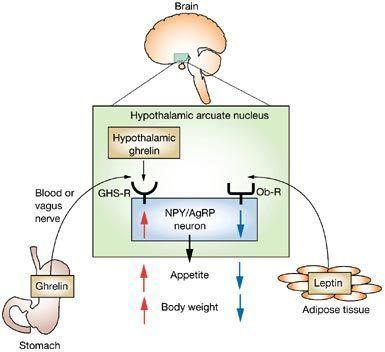
The hormone leptin is intricately involved in the regulation of appetite, metabolism and calorie burning. Leptin is the chemical that tells your brain when youre full, when it should start burning up calories and, by extension, when it should create energy for your body to use. It triggers a series of messages and responses that starts in the hypothalamus and ends in the thyroid gland. The thyroid gland controls the way your body stores and uses energy.
During sleep, leptin levels increase, telling your brain you have plenty of energy for the time being and theres no need to trigger the feeling of hunger or the burning of calories. When you dont get enough sleep, you end up with too little leptin in your body, which, through a series of steps, makes your brain think you dont have enough energy for your needs. So your brain tells you youre hungry, even though you dont actually need food at that time, and it takes steps to store the calories you eat as fat so youll have enough energy the next time you need it. The decrease in leptin brought on by sleep deprivation can result in a constant feeling of hunger and a general slow-down of your metabolism.

The other hormone found to be related to sleep and weight is ghrelin. The purpose of ghrelin is basically the exact opposite of leptin: It tells your brain when you need to eat, when it should stop burning calories and when it should store energy as fat. During sleep, levels of ghrelin decrease, because sleep requires far less energy than being awake does. People who dont sleep enough end up with too much ghrelin in their system, so the body thinks its hungry and it needs more calories, and it stops burning those calories because it thinks theres a shortage.
Some scientists hypothesize that these hormonal changes that occur during sleep are the result of anevolutionary process that ended up with humans who could survive the food shortages of winters. Traditionally speaking, winters have long nights and little food, and summers have short nights and an abundance of food. With shorter nights comes less sleep, less leptin and more ghrelin, making the body eat as much as possible and save those calories for the long winter ahead. With winter comes more sleep, meaning more leptin and less ghrelin, both of which tell the body its time to burn those calories it stored during the summer.
Sleep deprivation has also been found to increase levels of stress hormones and resistance to insulin, both of which also contribute to weight gain. Insulin resistance can also lead to type 2 diabetes.
The National Sleep Foundation offers the following tips to help make sure you get enough sleep for your body to function optimally:
• Try to aim for seven to nine hours of sleep per night.
• Increase your exercise level, but try not to exercise within three hours of your bed time.
• Dont ingest caffeine or alcohol near your bed time caffeine can keep you awake, and alcohol can disrupt the normal stages of your sleep.