
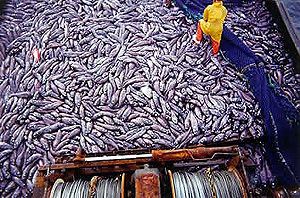
Overfishing is a form of overexploitation in which fish stocks are depleted to unacceptable levels, regardless of water body size.
For example, overfishing of sharks has led to the upset of entire marine ecosystems.
It has been some time since most humans lived as hunter-gatherers – with one important exception. Fish are the last wild animal that we hunt in large numbers. And yet, we may be the last generation to do so.
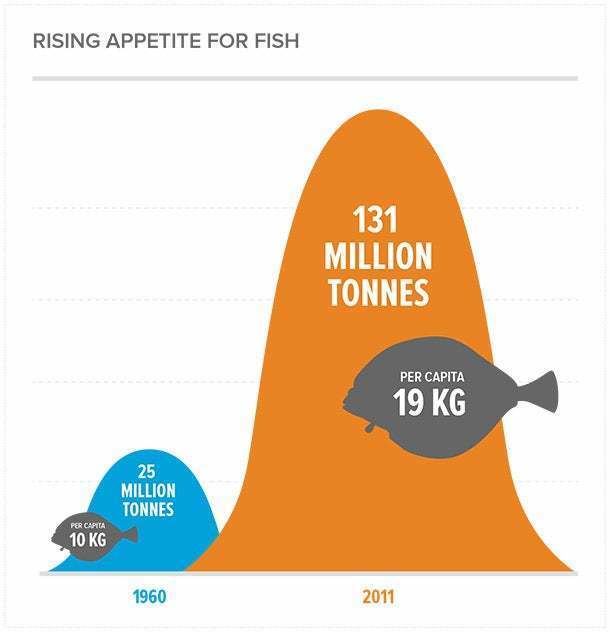
Entire species of marine life will never be seen in the Anthropocene (the Age of Man), let alone tasted, if we do not curb our insatiable voracity for fish. Last year, global fish consumption hit a record high of 17 kg (37 pounds) per person per year, even though global fish stocks have continued to decline. On average, people eat four times as much fish now than they did in 1950.
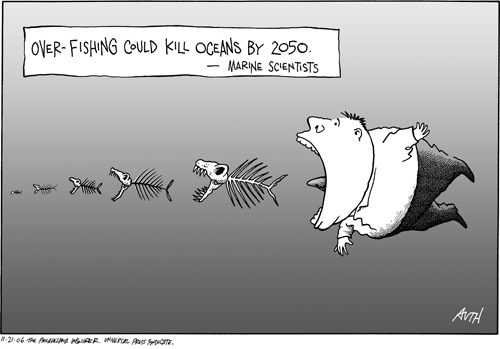
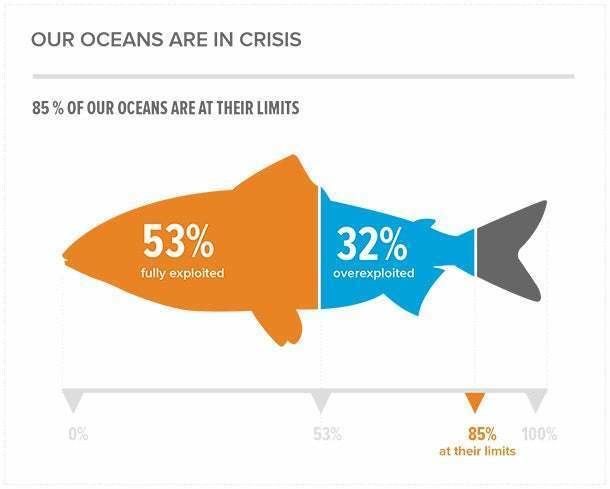
Around 85% of global fish stocks are over-exploited, depleted, fully exploited or in recovery from exploitation. Only this week, a report suggested there may be fewer than 100 cod over the age of 13 years in the North Sea between the United Kingdom and Scandinavia.
The figure is still under dispute, but it’s a worrying sign that we could be losing fish old enough to create offspring that replenish populations.
Large areas of seabed in the Mediterranean and North Sea now resemble a desert – the seas have been expunged of fish using increasingly efficient methods such as bottom trawling. And now, these heavily subsidised industrial fleets are cleaning up tropical oceans too.
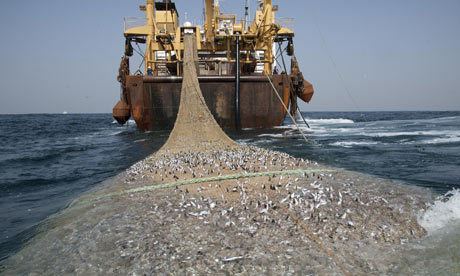
One-quarter of the EU catch is now made outside European waters, much of it in previously rich West African seas, where each trawler can scoop up hundreds of thousands of kilos of fish in a day. All West African fisheries are now over-exploited, coastal fisheries have declined 50% in the past 30 years, according to the UN Food and Agriculture Organisation.
Catches in the tropics are expected to decline a further 40% by 2050, and yet some 400 million people in Africa and Southeast Asia rely on fish caught (mainly through artisanal fishing) to provide their protein and minerals. With climate change expected to impact agricultural production, people are going to rely more than ever on fish for their nutritional needs.
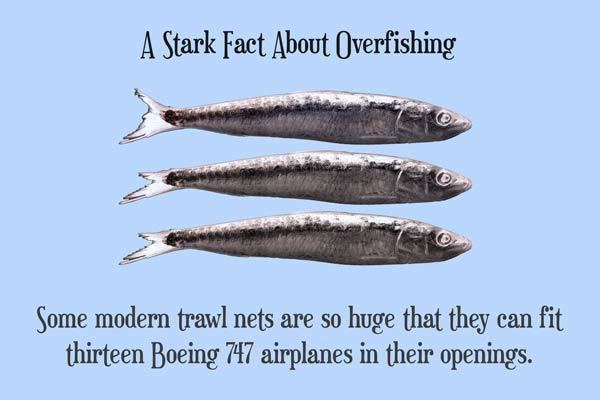
The policy of subsidising vast fishing fleets to catch ever-diminishing stocks is unsustainable. In Spain, for example, one in three fish landed is paid for by subsidy. Governments, concerned with keeping jobs alive in the fishing industry in the short-term, are essentially paying people to extinguish their own long-term job prospects – not to mention the effect on the next generation of fishermen. Artisanal fishing catches half the world’s fish, yet it provides 90% of the sector’s jobs.
According to a 2008 UN report, the worlds fishing fleets are losing US$50 billion each year through depleted stocks and poor fisheries management. The report, produced jointly by the World Bank and the UN Food and Agriculture Organization (FAO), asserts that half the worlds fishing fleet could be scrapped with no change in catch. In addition, the biomass of global fish stocks have been allowed to run down to the point where it is no longer possible to catch the amount of fish that could be caught.
Increased incidence of schistosomiasis in Africa has been linked to declines of fish species that eat the snails carrying the disease-causing parasites.
Massive growth of jellyfish populations threaten fish stocks, as they compete with fish for food, eat fish eggs, and poison or swarm fish, and can survive in oxygen depleted environments where fish cannot; they wreak massive havoc on commercial fisheries. Overfishing eliminates a major jellyfish competitor and predator exacerbating the jellyfish population explosion.
Protect depletion
Clearly, industrialised countries are not about to return to traditional methods. However, the disastrous management of the industry needs to be reformed if we are to restore fisheries to a sustainable level. In the EU alone, restoring stocks would result in greater catches of an estimated 3.5 million tonnes, worth £2.7 billion a year.
Rather than having a system in which the EU members each hustle for the biggest quotas – which are already set far beyond what is sustainable – fisheries experts suggest individual governments should set quotas based on stock levels in their surrounding waters. Fishermen should be given responsibility over the fish they hunt – they have a vested interest in seeing stocks improve, after all – and this could be in the form of individual tradable catch shares of the quotas.
Some Documentaries on overfishing
Such policies end the tragedy of the commons situation whereby everyone grabs as much as they can from the oceans before their rival nets the last fish, and it’s been used successfully in countries from Iceland to New Zealand to the US. Research shows that managing fisheries in this way means they are twice as likely to avoid collapse as open-access fisheries.
In severely depleted zones, the only way to restore stocks is by introducing protected reserves where all fishing is banned. In other areas, quota compliance needs to be properly monitored – fishing vessels could be licensed and fitted with tracking devices to ensure they don’t stray into illegal areas, spot-checks on fish could be carried out to ensure size and species, and fish could even be tagged, so that the authorities and consumers can ensure its sustainable source.
The other option is to take humanitys usual method of dealing with food shortages, and move from hunter-gathering to farming.
Already, more than half of the fish we eat comes from farms – in China, it’s as high as 80% – but doing this on an industrial scale has its problems. Farms are stocked with wild fish, which must then be fed – larger fish like salmon and tuna eat as much as 20 times their weight in smaller fish like anchovies and herring. This has led to overfishing of these smaller fish, but if farmed fish are fed a vegetarian diet, they lack the prized omega-3 oils that make them nutritious, and they do not look or taste like the wild varieties. Scientists are working to create an artificial version of omega-3 – current synthetic omega-3 versions are derived from fish oils.
Fish farms are also highly polluting. They produce a slurry of toxic run-off – manure – which fertilises algae in the oceans, reducing the oxygen available to other species and creates dead zones. Scotlands salmon-farming industry, for example, produces the same amount of nitrogen waste as the untreated sewage of 3.2 million people – over half the countrys population. As a result, there are campaigns to ban aquaculture from coastal areas.
Farmed fish are also breeding grounds for infection and parasites that kill off large proportions of fish – escapees then frequently infect wild populations. Farmers try to control infestations with antibiotics, but usually only succeed in creating a bigger problem of antibiotic resistance.
Dangerous predator
Humanity is not limiting its impacts to fish most commonly found on menus. Exotic sea creatures from turtles to manta ray to marine mammals are being hunted to extinction. Shark numbers, for example, have declined by 80% worldwide, with one-third of shark species now at risk of extinction. The top marine predator is no longer the shark, it’s us.
Ending overfishing
A decline in shark numbers has a significant impact on the marine ecosystem: it can lead to an increase in fish numbers further down the food chain, which in turn can cause a crash in the population of very small marine life, such as plankton. Without the smallest creatures, the entire system is threatened.
One of the repercussions, which I have discussed before, is an increase in jellyfish numbers, but overfishing, pollution, climate change and acidification also affect the marine ecosystem. Warmer waters are pushing species into different habitats, causing some to die off and others to adapt by creating entirely new hybrid species. Meanwhile, trawlers are netting bycatch that include marine mammals and even seabirds – as many as 320,000 seabirds are being killed annually when they get caught in fishing lines, pushing populations of albatrosses, petrels and shearwaters to the edge of extinction.
Some solutions are easier than you might think. Seabirds can be protected by using weighted lines and scaring off birds with lines that have flapping streamers attached – these methods alone have reduced seabird deaths by more than 85-99% where they are used.
Overfishing consequences
Some Measures to stop overfishing
Safe catch limits
A constantly reassessed, scientifically determined, limit on the total number of fish caught and landed by a fishery. Politics and short time economical incentives should have no role in this.
Controls on bycatch
The use of techniques or management rules to prevent the unintentional killing and disposal of fish, crustaceans and other oceanic life not part of the target catch or landed.
Protection of important habitats
The key parts in ecosystems need full protection from destructive fisheries; e.g. the spawning and nursing grounds of fish, delicate sea floor, unique unexplored habitats, and corals.
Monitoring and Enforcement
A monitoring system to make sure fishermen do not land more than they are allowed to, do not fish in closed areas and cheat as less as possible. Strong monetary enforcement is needed to make it uneconomic to cheat.
Strengthening and expanding protected marine reserves would also go a long way to conserving species. Currently, less than 1% of the ocean is protected, although by 2020, the international community has agreed to raise this to 10%.
Putting pressure on governments to limit fishing subsidies, estimated at tens of billions of dollars per year. Eliminating subsidies of this scale lowers the financial incentives to continuously expand fishing fleets far beyond sustainability.
Establishing and expanding Marine Protected Areas (MPAs), areas of the ocean where natural resources are protected and fishing is either restricted or banned altogether (no-take areas). Presently, 1% of the oceans are MPAs. This number needs to be bigger if they are to help reverse the damage done by overfishing. The Save Our Seas Foundation has been actively involved in supporting MPAs through our projects in the Cocos (Keeling) Islands and the Maldives.
Better monitoring and policing of the fish trade. Pirate fishing continues to grow in scope, and though illegal, fish caught in such operations often end up on our plates.
Aquaculture, or the breeding and harvesting of aquatic animals and plants, has become a growing practice and is seen as a solution to the fish consumption crisis
Consumers choosing to buy sustainably-sourced seafood and avoiding threatened species. Overfishing is driven by global demand — lowering the demand will lower the damage.