Currently I am pursuing PHD, My Interests are Gardening, Learning new things ...
Information technology for management of enterprises
Updated on
Edit
Like
Comment
Share
Sign in
INFORMATION TECHNOLOGY FOR MANAGEMENT OF ENTERPRISES Enterprise Information Management (EIM) is a particular field of interest within information technology. It specializes in finding solutions for optimal use of information within organizations, for instance to support decision-making processes or day-to-day operations that require the availability of knowledge. It tries to overcome traditional IT-related barriers to managing information at an enterprise level.
Enterprise information management combines Enterprise Content Management (ECM), Business Process Management (BPM), Customer Experience Management (CEM), Business Intelligence (BI). Enterprise information management takes these two approaches to managing information one step further, in that it approaches information management from an enterprise perspective. Where BI and ECM respectively manage structured and unstructured information, EIM does not make this "technical" distinction. It approaches the management of information from the perspective of enterprise information strategy, based on the needs of information workers. ECM and BI in a sense choose a denominationalised approach, since they only cover part of the information within an organization. This results in a lack of available information during decision-making processes, market analysis, or procedure definition.
Organizational Performance: IT support and Applications 1. Describe the digital economy and digital enterprises
2. Recognize the relationship between performance, organizational pressures, and responses and technology
3. Define Information Systems and the difference between data, information and knowledge
4. Understand what the adaptive enterprise is
5. Understand the support role that IS and IT play in the organization
6. Understand the importance of learning about IT
Doing Business in the Digital Economy Economy based on digital technologies (Internet economy, new economy, web economy)
1. E-Business: The use of electronic technologies to transact business
2. Collaboration: People and organizations interact, communicate, collaborate, and search for information
3. Information Exchange: Storing, processing and transmission of information
New Economy vs. Old Economy
Example #1: Registering for Classes
Old Economy: You would go to the Registrar’s Office on campus with a paper registration document
New Economy: You access your campus website, log into registration site, and electronically register for classes from anywhere
Business Pressures 1. Environmental, organizational, and technological factors
2. React frequently and quickly to both the threats and the opportunities resulting from this new business environment
3. The business environment is the combination of social, legal, economic, physical, and political factors that affect business activities
4. Significant changes in any of these factors are likely to create business pressure on the organization
5. The three types of business pressures faced are: market, technology, and societal pressures.
What is an Information System? A set of interrelated components that collect, manipulate, store, and disseminate data and information and provide feedback to meet an objective.
Major capabilities of computerized information systems 1. Perform high-speed high-volume, numerical computations (DSS) 2. Provide fast, accurate, reliable, and inexpensive communication within and between organizations, anytime, anyplace. 3. Store huge amounts of information in an easy to access, yet small space (database management) 4. Allow quick and inexpensive access to vast amounts of information worldwide at any time 5. Enable collaboration any where anytime. 6. Increase the effectiveness and efficiency of people working in groups in one place or in several locations (ex. data exchange, video conferencing) 7. Vividly present information 8. Facilitate global trade (ex. thaigem.com) 9. Enable automation of routing decision making 10. Can be wireless, thus supporting unique applications
Information Concepts Data items: An elementary description of things, events, activities, and transactions that are recorded, classified, and stored, but are not organized to convey any specific meaning.
Information: Data that have been organized so that they have meaning and value to the recipient.
Knowledge: Data and / or information that have been orgnized and processed to convey understanding, experience, accumulated learning, and expertise as apply to a current problem or activity.
What does Agile and Adaptive mean? Agile means the ability to swiftly sense and respond to changes in our environment (like a leopard changing course in a chase), while Adaptive suggests we are always looking for new and creative ways of doing things to emerge (like a lion overlooking the herd of gazelles). Similarly, AAM focuses on the organizational, leader/manager, and individual management skills needed to make and deliver business value “as soon as possible”, while also looking for ways to deliver better results in the future.
How is AAM organized? AAM tries to practice what it preaches by being a community of consultants who assure their client’s needs are met iteratively and with measurable results. We like to begin our engagements with some form of an assessment that leads to a suggested iterative plan of work. That plan of work and associated measures of success then help us suggest an appropriate fee schedule based on what we jointly accomplish.
Real time Enterprise Real-time enterprise (commonly abbreviated to RTE) is a concept in business systems design focused on ensuring organisational responsiveness that was popularised in the first decade of the 21st century. It is also referred to as on-demand enterprise. Such an enterprise must be able to fulfill orders as soon as they are needed.
Though not particularly well defined, generally accepted goals of an RTE include: 1. Reduced response times for partners and customers 2. Increased transparency, for example sharing or reporting information across an enterprise instead of keeping it within individual departments 3. Increased automation, including communications, accounting, supply chains and reporting 4. Increased competitiveness 5. Reduced costs
IT Support Systems: Concepts and Management Information Technology Infrastructure. The physical facilities, IT components, IT services and IT management that support an entire organization.Information System (IS). Collects, processes, stores, analyzes and disseminates information for a specific purpose. Computer-based Information System (CBIS). An information system that uses computer technology to perform some or all of its intended tasks.
Types of Information Systems Information Systems that support specific functional areas and operations include: 1. Functional Area Information System 2. Transaction Processing System (TPS) 3. Enterprise Resource Planning (ERP) System 4. Interorganizational Information System 5. Electronic Commerce Systems
Support for Organizational Employees 1)Knowledge workers are professional employees such as financial and marketing analysts, engineers, lawyers and accountants. 1. They create information and knowledge about a specific subject area and integrate it into an organization. 2. Act as advisors to middle managers and executives.
2)Office Automation System (OAS) Function: Support daily work activities of individuals and groups. Example: Microsoft Office Support: Clerical staff, lower and middle managers and knowledge workers.
3)Management Information System (MIS) Function: Produce reports summarized from transaction data, usually in one functional area. Example: Report on total sales of each customer. Supports: Primarily for middle managers, sometimes for lower level managers as well.
4)Decision Support System (DSS) Function: Provide access to data and analysis tools. Example: “What if” analysis of changes in a budget. Supports: Primarily for Middle managers and knowledge workers
5)Expert System (ES) Function: Mimic human expert in a particular area and make a decision. Example: Credit card approval analysis. Supports: Knowledge workers
6)Executive Information System (EIS) Function: Present structured, summarized information about aspects of business important to executives. Example: Status of production by product. Supports: Top managers of the organization.
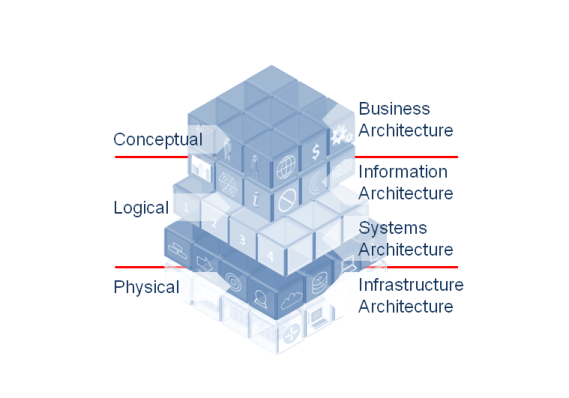
Information Systems Infrastructure and Architecture A well-designed information system rests on a coherent foundation that supports responsive change—and, thus, the organization’s agility—as new business or administrative initiatives arise. Known as the information system infrastructure, the foundation consists of core telecommunications networks, databases and data warehouses, software, hardware, and procedures managed by various specialists. With business globalization, an organization’s infrastructure often crosses many national boundaries. Establishing and maintaining such a complex infrastructure requires extensive planning and consistent implementation to handle strategic corporate initiatives, transformations, mergers, and acquisitions. Information system infrastructure should be established in order to create meaningful options for future corporate initiatives. Real World Examples 1. In 1998 People’s Bank decided that its existing IT architecture was limiting. 2. They needed seamless links to external partners for support of real-time data transfer. 3. They developed a new 4-tier architecture that was up and running by October 2000
Benefits 1. The ability to introduce new services more rapidly at lower costs, and improved operational efficiency in many areas. 2. Also, cut customer response time 30% and saved more than $100,000 on desktop administration.
From Vision to Implementation 1. Architecture translates strategy into infrastructure. 2. The architect develops plans based on a vision of the customer of the system (or in this example a house) which is a blueprint of the companies systems. 3. This “blueprint” is used for translating business strategy into a plan for IS. 4. The IT infrastructure is everything that supports the flow and processing of information (hardware, software, data, and networks).
Emerging Computing Environments : SaaS, SOA and more, Managerial issues • Popular enterprise model in which computing resources are made available to the user when they are needed • Also referred to as SaaS, On demand computing, Utility computing or hosted services • Instead of buying and installing expensive and annoying packaged enterprise applications, user can access them over a network with a browser • No need to buy h/w or s/w • Paid for through a fixed subscription fees or payable per an actual usage fee • Offer standardized, componentized, common & lower cost s/w services which can be sourced at will from some type of service provider Why SaaS was needed? • Enterprises are challenged of being able to meet fluctuating demands efficiently to become an adaptive enterprise • To overcome this challenge, SaaS like models were developed • enterprise’s demand on computing resources can vary drastically from time to time • Maintaining sufficient resources to meet peak requirements can be costly • If enterprises cut the cost by maintaining only minimal computing resources, there will not be sufficient resources to meet the peak requirements • So to balance the increasing requirements & cost of resources, SaaS is developed
Service Oriented Architecture (SOA) • Enterprises need to be – adaptive and – respond more quickly to consumer demands & at the same time – ensure security, data integrity & regulatory compliance • Current architecture & infrastructure may not support the level of flexibility needed in rapidly changing business environment
• the basic idea behind the SOA is to reuse & reconnect existing IT assets/ services rather than more time consuming & costly developments of new systems • In SO environment, organizations make resources available to participants via a n/w as independent services that can be accessed in a standardized way using web services • SaaS at its highest level, must be delivered as a SOA & must embody web services
E Commerce and E Business Electronic commerce or e-commerce refers to a wide range of online business activities for products and services. It also pertains to “any form of business transaction in which the parties interact electronically rather than by physical exchanges or direct physical contact.” E-commerce is usually associated with buying and selling over the Internet, or conducting any transaction involving the transfer of ownership or rights to use goods or services through a computer-mediated network. Though popular, this definition is not comprehensive enough to capture recent developments in this new and revolutionary business phenomenon. A more complete definition is: E-commerce is the use of electronic communications and digital information processing technology in business transactions to create, transform, and redefine relationships for value creation between or among organizations, and between organizations and individuals.
Electronic commerce, commonly known as E-commerce or eCommerce, is trading in products or services conducted via computer networks such as the Internet. Electronic commerce draws on technologies such as mobile commerce, electronic funds transfer, supply chain management, Internet marketing, online transaction processing, electronic data interchange (EDI), inventory management systems, and automated data collection systems. Modern electronic commerce typically uses the World Wide Web at least at one point in the transactions life-cycle, although it may encompass a wider range of technologies such as e-mail, mobile devices, social media, and telephones as well.
Electronic commerce is generally considered to be the sales aspect of e-business. It also consists of the exchange of data to facilitate the financing and payment aspects of business transactions. This is an effective and efficient way of communicating within an organization and one of the most effective and useful ways of conducting business. It is a Market entry strategy where the company may or may not have a physical presence.
e business, or e-business, is the application of information and communication technologies (ICT) in support of all the activities of business. Commerce constitutes the exchange of products and services between businesses, groups and individuals and can be seen as one of the essential activities of any business. Electronic commerce focuses on the use of ICT to enable the external activities and relationships of the business with individuals, groups and other businesses. The term "e-business" was coined by IBMs marketing and Internet teams in 1996.
Is e-commerce the same as e-business? While some use e-commerce and e-business interchangeably, they are distinct concepts. In e-commerce, information and communications technology (ICT) is used in inter-business or inter-organizational transactions (transactions between and among firms/organizations) and in business-to-consumer transactions (transactions between firms/organizations and individuals).
In e-business, on the other hand, ICT is used to enhance one’s business. It includes any process that a business organization (either a for-profit, governmental or non-profit entity) conducts over a computer-mediated network. A more comprehensive definition of e-business is:
“The transformation of an organization’s processes to deliver additional customer value through the application of technologies, philosophies and computing paradigm of the new economy.”
Three primary processes are enhanced in e-business: 1. Production processes, which include procurement, ordering and replenishment of stocks; processing of payments; electronic links with suppliers; and production control processes, among others; 2. Customer-focused processes, which include promotional and marketing efforts, selling over the Internet, processing of customers’ purchase orders and payments, and customer support, among others; and 3. Internal management processes, which include employee services, training, internal information-sharing, video-conferencing, and recruiting. Electronic applications enhance information flow between production and sales forces to improve sales force productivity. Workgroup communications and electronic publishing of internal business information are likewise made more efficient.
Mechanisms Of E-Commerce: Electronic Auctions The major mechanism for buying and selling on the Internet is the electronic catalog. However, in order to better understand how e-commerce works, let’s first look at two common mechanisms used in its implementation: electronic auctions and bartering online.
An auction is a market mechanism by which sellers place offers and buyers make sequential bids. The primary characteristic of auctions, whether offline or online, is that prices are determined dynamically by competitive bidding. Auctions have been an established method of commerce for generations, and they are well-suited to deal with products and services for which conventional marketing channels are ineffective or inefficient. Auctions can expedite the disposal of items that need liquidation or a quick sale.
The Internet provides an efficient infrastructure for executing electronic auctions — auctions conducted online — at lower administrative cost and with many more involved sellers and buyers. Individual consumers and corporations alike can participate in this rapidly growing form of e-commerce. There are several types of auctions, each with its motives and procedures. Auctions are divided here into two major types: forward auctions and reverse auctions
Forward Auctions Forward auctions are auctions that sellers use as a selling channel to many potential buyers. Usually, items are placed at sites for auction, and buyers will bid continuously for the items. The highest bidder wins the items. Sellers and buyers can be individuals or businesses. The popular auction site eBay.com is a forward auction. There are two types of forward e-auctions. One is for liquidations, the other one is to increase marketing ef�ciency.
Liquidation Auctions: Seek first to maximize existing channels and reduce inventory before using auction (Supplies) — Disincentives to use auction shrink supply over time (Auction) — Seek lowest price on widely available goods and services (Customers)
Market Efficiency Auctions: Prefer market format that maximizes visibility with potential buyers (Supplies) — Incentives to use auction increase supply over time (Auction) — Seek access to unique/rare products or services (Customers)
Reverse Auctions reverse auctionIn reverse auctions, there is one buyer, usually an organization, that wants to buy a product or a service. Suppliers are invited to submit bids. Online bidding is much faster than conventional bidding, and it usually attracts many more bidders. The reverse auction is the most common auction model for large purchases (in terms of either quantities or price). Governments and large corporations frequently mandate this approach, which may provide considerable savings. Auctions are used in B2C, B2B, C2B, e-government, and C2C commerce, and they are becoming popular in many countries. Electronic auctions started in the 1980s on private networks, but their use was limited. The Internet opens many new opportunities for e-auctions. As we have discussed, auctions can be conducted from the seller’s site, the buyer’s site, or from a third-party site. For Example, eBay, the most known third-party site, offers hundreds of thousands of different items in several types of auctions. Over 300 other major companies, including Amazon.com and Dellauction.com, offer online auctions as well.
Bartering Related to auctions is electronic bartering, the exchange of goods or services without a monetary transaction. In addition to the individual-to-individual bartering ads that appear in some newsgroups, bulletin boards, and chat rooms, there are several intermediaries that arrange for corporate e-bartering (e.g., barterbrokers.com). These intermediaries try to match online partners to a barter,.
B2B Applications
Business-to-business (B2B) describes commerce transactions between businesses, such as between a manufacturer and a wholesaler, or between a wholesaler and a retailer. Contrasting terms are business-to-consumer (B2C) and business-to-government (B2G). B2B branding is a term used in marketing. The overall volume of B2B (Business-to-Business) transactions is much higher than the volume of B2C transactions. The primary reason for this is that in a typical supply chain there will be many B2B transactions involving sub components or raw materials, and only one B2C transaction, specifically sale of the finished product to the end customer. For example, an automobile manufacturer makes several B2B transactions such as buying tires, glass for windscreens, and rubber hoses for its vehicles. The final transaction, a finished vehicle sold to the consumer, is a single (B2C) transaction.
B2B is also used in the context of communication and collaboration. Many businesses are now using social media to connect with their consumers (B2C); however, they are now using similar tools within the business so employees can connect with one another. When communication is taking place amongst employees, this can be referred to as "B2B" communication.
IT Compliance: Functional Applications and Transaction Processing
Functional informational Systems Functional Information System is based on the various business functions such as Production, Marketing, Finance and Personnel etc. These departments or functions are known as functional areas of business. Each functional area requires applications to perform all information processing related to the function. The popular functional areas of the business organization are: (i) Financial Information System (ii) Marketing Information System (iii) Production/Marketing Information System (iv) Human Resource Information System
transaction processing Information systems Transaction processing is a style of computing that divides work into individual, indivisible operations, called transactions. A transaction processing system (TPS) or transaction server is a software system, or software/hardware combination, that supports transaction processing.
Transaction processing is distinct from other computer processing models — batch processing, time-sharing, and real-time processing. Batch processing Batch processing is execution of a series of programs (jobs) on a computer without manual intervention. Several transactions, called a batch are collected and processed at the same time. The results of each transaction are not immediately available when the transaction is being entered; there is a time delay.
Real-time processing "Real time systems attempt to guarantee an appropriate response to a stimulus or request quickly enough to affect the conditions that caused the stimulus." Each transaction in real-time processing is unique; it is not part of a group of transactions.
Time-sharing Time sharing is the sharing of a computer system among multiple users, usually giving each user the illusion that they have exclusive control of the system. The users may be working on the same project or different projects, but there are usually few restrictions on the type of work each user is doing.
Managing Production / Operations and Logistics The mission of Logistics and Operations Management is to produce the appropriate goods or services in the right quality and quantity, and to distribute them to the right place at the right time, thereby making the greatest contribution to the organization. In a business environment, Logistics and Operations Management encompasses the design, implementation and management of systems for efficient deployment of personnel, physical facilities, raw materials, in-process inventories, finished goods and related information or services. Logistics and Operations Management covers the whole supply chain, from the acquisition of raw materials, through production, to the point of consumption. Logistics and Operations Management analysts must be proficient in the use of quantitative models and computers, and communicate effectively.
The Logistics and Operations Management Area at University of Missouri - Saint Louis covers a wide range of topics including logistics, production and service operations management, management science, operations research, supply chain management, lean production, quality, forecasting, and statistics.
Managing Marketing and Sales Systems Marketing management is a business discipline which focuses on the practical application of marketing techniques and the management of a firms marketing resources and activities. Globalization has led firms to market beyond the borders of their home countries, making international marketing highly significant and an integral part of a firms marketing strategy. Marketing managers are often responsible for influencing the level, timing, and composition of customer demand accepted definition of the term. In part, this is because the role of a marketing manager can vary significantly based on a businesss size, corporate culture, and industry context. For example, in a large consumer products company, the marketing manager may act as the overall general manager of his or her assigned product. To create an effective, cost-efficient marketing management strategy, firms must possess a detailed, objective understanding of their own business and the market in which they operate. In analyzing these issues, the discipline of marketing management often overlaps with the related discipline of strategic planning.
Sales force management systems are information systems used in CRM marketing and management that help automate some sales and sales force management functions. They are often combined with a marketing information system, in which case they are often called customer relationship management (CRM) systems. Sales force management systems are essentially the same thing as sales force automation system (SFA).
A SFA, typically a part of a company’s customer relationship management system, is a system that automatically records all the stages in a sales process. SFA includes a contact management system which tracks all contact that has been made with a given customer, the purpose of the contact, and any follow up that may be needed. This ensures that sales efforts are not duplicated, reducing the risk of irritating customers. SFA also includes a sales lead tracking system, which lists potential customers through paid phone lists, or customers of related products. Other elements of an SFA system can include sales forecasting, order management and product knowledge. More developed SFA systems have features where customers can actually model the product to meet their needs through online product building systems. This is becoming more and more popular in the automobile industry, where patrons can customize various features such as color and interior features such as leather vs. upholstered seats.
Integrating Functional Information Systems In engineering, system integration is defined as the process of bringing together the component subsystems into one system and ensuring that the subsystems function together as a system. In information technology, systems integration is the process of linking together different computing systems and software applications physically or functionally, to act as a coordinated whole. The system integrator brings together discrete systems utilizing a variety of techniques such as computer networking, enterprise application integration, business process management or manual programming.
Functional Integration is very versatile because many different operations can be performed though an API. A functional interface can retrieve data, update data entities (change an address), or perform business functions (validate a credit card). In fact, one common use of Functional Integration is to ensure data consistency between applications.
Understanding Enterprise Systems: Supply Chain Supply chain management (SCM) is the management of the flow of goods. It includes the movement and storage of raw materials, work-in-process inventory, and finished goods from point of origin to point of consumption. Interconnected or interlinked networks, channels and node businesses are involved in the provision of products and services required by end customers in a supply chain. Supply chain management has been defined as the "design, planning, execution, control, and monitoring of supply chain activities with the objective of creating net value, building a competitive infrastructure, leveraging worldwide logistics, synchronizing supply with demand and measuring performance globally."
Contemporary supply chains stretch around the globe — a complicated matrix that reflects the easing of international trade barriers, an increase in global trade, and dramatic growth in business outsourcing and offshoring to low-cost suppliers. Needless to say, the trends toward globalization have significantly increased the number of players involved in bringing a product to a consumer. “A supply chain is essentially a network consisting of suppliers, manufacturers, distributors, retailers and customers,” wrote Kleindorfer. “The network supports three types of flows that require careful design and close coordination: 1) material flows, which represent physical product flows from suppliers to customers as well as reverse flows for product returns, servicing and recycling; 2) information flows, which represent order transmission and order tracking, and which coordinate the physical flows; and 3) financial flows, which represent credit terms, payment schedules and consignment arrangements. These flows are sometimes referred to as the ’3Bs’ of supply chain management; boxes, bytes and bucks.”
The coordination of these three flows within the supply chain, Kleindorfer argues, is supported by three pillars: processes, organizational structures, and “enabling technologies, encompassing both process and information technologies.” When applied correctly, technology has helped businesses conquer what Kleindorfer calls “arguably the central problem in supply chain management” — efficient coordination of supply and demand.
supply chain challenges The Five Most Common Supply Chain Management Challenges 1. Unable to apply the right metrics to manage supply chains effectively 2. Difficulty prioritizing supply chain improvement efforts 3. Performance is lagging 4. Complexity of supply chains 5. Finding and holding on to supply chain talent
Business Process Management
Business process management (BPM) has been referred to as a "holistic management" approach to aligning an organizations business processes with the wants and needs of clients. BPM uses a systematic approach in an attempt to continuously improve business effectiveness and efficiency while striving for innovation, flexibility, and integration with technology. It can therefore be described as a "process optimization process." It is argued that BPM enables organizations to be more efficient, more effective and more capable of change than a functionally focused, traditional hierarchical management approach. These processes can impact the cost and revenue generation of an organization. As a managerial approach, BPM sees processes as strategic assets of an organization that must be understood, managed, and improved to deliver value-added products and services to clients. This foundation closely resembles other Total Quality Management or Continuous Improvement Process methodologies or approaches. BPM goes a step further by stating that this approach can be supported, or enabled, through technology to ensure the viability of the managerial approach in times of stress and change. In fact, BPM offers an approach to integrate an organizational "change capability" that is both human and technological. As such, many BPM articles and pundits often discuss BPM from one of two viewpoints: people and/or technology.
BPM or Business Process Management is often referred to[by whom?] as Management by Business Processes. The term "business" can be confusing as it is often linked with a hierarchical view (by function) of a company. It is therefore preferable to define BPM as "corporate management through processes". By adding to BPM the second meaning of Business Performance Management used by August-Wilhelm Scheer in his article "Advanced BPM Assessment", BPM can therefore be defined as "company performance management through processes".
Product life cycle Management In industry, product lifecycle management (PLM) is the process of managing the entire lifecycle of a product from inception, through engineering design and manufacture, to service and disposal of manufactured products. PLM integrates people, data, processes and business systems and provides a product information backbone for companies and their extended enterprise.
PLM systems help organizations in coping with the increasing complexity and engineering challenges of developing new products for the global competitive markets. Product lifecycle management (PLM) should be distinguished from product life cycle management (marketing) (PLCM). PLM describes the engineering aspect of a product, from managing descriptions and properties of a product through its development and useful life; whereas, PLCM refers to the commercial management of life of a product in the business market with respect to costs and sales measures.
Product lifecycle management can be considered one of the four cornerstones of a manufacturing corporations information technology structure. All companies need to manage communications and information with their customers (CRM-customer relationship management), their suppliers and fulfillment (SCM-supply chain), their resources within the enterprise (ERP-enterprise resource planning) and their product planning and development (PLM). One form of PLM is called people-centric PLM. While traditional PLM tools have been deployed only on release or during the release phase, people-centric PLM targets the design phase.
Global and Interorganizational Information Systems
Interorganizational Information Systems 1. An IOS is a collection of IT resources, includingcommunications networks, hardware, IT applications,standards for data transmission, and human skills andexperiences. 2. It provides a framework for electronic cooperationbetween businesses by allowing the processing, sharingand communication of information. 3. IOS are also known as extranets. 4. They allow electronic processing of businesstransactions and documents, as well as the transfer of information with minimal effort and makes it quicklyavailable.
IOS can be categorized into four phases, in terms of historical IS development: Phase One - Manual systems Phase Two - EDI systems Phase Three - ERP systems Phase Four - Internet-enabled systems
Global and Information Systems An organized collection ofcomputer hardware, communicationequipment, software, data, andpersonnel designed to capture,store, update, manipulate, analyze,and immediately display informationabout worldwide businessactivities.
Internet as Global information System 1. Today, the Internet is rapidly becoming a globalinformation system in which all kinds of information can be accessed from virtually anywhere. 2. The increase in Internet use has been influenced bythe commercialization of the Internet, the level of media coverage, the low cost of access, and easierinterfaces. 3. The Internet is considered to be at the leading-edgetechnology. There is a growing acceptance that if abusiness does not join the Internet very soon, it maybe out of business .
The Global Information System (GIS) is aglobal-coverage, core current strategicintelligence service for use only bygovernments. It is not available to non-governmental subscribers. GIS represents abase of more than 150,000 pages of data andimages on 246 countries and territories,updated daily, along with a constantly-growingdatabase of special reports on a wide range of specialist topics and regional studies.
Partner relationship Management and collaborative commerce
Partner Relationship Management · Partner Relationship Management (PRM): a business strategy that recognizes the need to develop long-term relationships with business partners, by providing each partner with the services that are the most beneficial to that partner. · What PRM Does: PRM solutions connect companies with their business partners (suppliers, customers, services) using Web technology to securely distribute and manage information. (Facilitates partner relationships). o Partner profiles o Partner communications o Management of customer leads o Targeted information distribution o Connecting the extended enterprise o Partner planning o Centralized forecasting o Group planning o E-Mail and Web-based alerts o Messaging o Price lists o Community bulletin boards · Supplier Relationship Management: where the partners are the suppliers o PeopleSoft’s SRM Model: generic and possible for any large company; CONCEPT: e-supply chain is based on integration and collaboration § 12 Steps: 1. Access 2. Indentify Suppliers 3. Assess Supplier Performance 4. Negotiate 5. Contract 6. Connect 7. Engage 8. Transact 9. Deliver 10. Receive 11. Resolve 12. Pay
Collaborative Commerce · Collaborative commerce (c-commerce): refers to non-selling/buying electronic transactions within, between, and among organizations · Retailer-Suppliers: production and inventory planning · Product Design: allows all parties working on a project design to use software tools to share data and collaborate. o Ex/Screen Sharing · Collaborative Manufacturing: Web-based collaborative IOSs have improved the outsourcing process and are useful in tracking changes that may be initiated by any partner along the supply chain.
Managing Knowledge Knowledge management (KM) is the process of capturing, developing, sharing, and effectively using organisational knowledge. It refers to a multi-disciplined approach to achieving organisational objectives by making the best use of knowledge. An established discipline since 1991 (see Nonaka 1991), KM includes courses taught in the fields of business administration, information systems, management, and library and information sciences (Alavi & Leidner 1999). More recently, other fields have started contributing to KM research; these include information and media, computer science, public health, and public policy. Columbia University and Kent State University offer dedicated Master of Science degrees in Knowledge Management. Many large companies, public institutions and non-profit organisations have resources dedicated to internal KM efforts, often as a part of their business strategy, information technology, or human resource management departments. Several consulting companies provide strategy and advice regarding KM to these organisations.
Knowledge management efforts typically focus on organisational objectives such as improved performance, competitive advantage, innovation, the sharing of lessons learned, integration and continuous improvement of the organisation. KM efforts overlap with organisational learning and may be distinguished from that by a greater focus on the management of knowledge as a strategic asset and a focus on encouraging the sharing of knowledge. It is seen as an enabler of organisational learning and a more concrete mechanism than the previous abstract research.
knowledge management activities Purpose – The purpose of the paper is to present a vocabulary of terms that clearly define knowledge management (KM) activities in order to move towards consensus in the adoption of a common language within the field.
Design/methodology/approach – Existing literature across several disciplines has been integrated to provide a clear description of the sorts of activities an individual undertakes in order to move from knowledge acquisition to innovation, and a clarification of the terms used to describe such activities is put forth.
Findings – Adoption of a common vocabulary to describe KM activities provides a platform to better understand how best to manage these activities, and enables clearer identification of the knowledge management capabilities held by various sectors within the broader business community.
Research limitations/implications – There is a need to undertake empirical research and in-depth case studies of knowledge management practices using a common vocabulary as a framework with which to interpret findings.
Practical implications – The adoption of a common frame of reference to describe knowledge management activities will deepen understanding of current KM practices, enable identification inhibitors and facilitators of KM, lead to increased dialogue between academia and industry, and present opportunities to the education sector to incorporate such a vocabulary into its curriculum.
Originality/value – The framework presented here will remove the veil of mystery that currently clouds knowledge management and facilitate broader uptake of KM practices, thereby realising the benefits of a knowledge-based economy in the broader business community.
Corporate Performance Management and Business Intelligence
Corporate Performance Management Corporate performance management (CPM) is the area of business intelligence (BI) involved with monitoring and managing an organizations performance, according to key performance indicators (KPIs) such as revenue, return on investment (ROI), overhead, and operational costs. CPM is also known as business performance management (BPM) or enterprise performance management (EPM).
Historically used within finance departments, CPM software is now designed to be used enterprise-wide, often as a complement to business intelligence systems. CPM software includes forecasting, budgeting and planning functions, as well as graphical scorecards and dashboards to display and deliver corporate information. A CPM interface usually displays figures for key performance indicators so that employees can track individual and project performance relative to corporate goals and strategies. Some companies use established management methodologies with their CPM systems, such as balanced scorecard or Six Sigma.
Business intelligence Business intelligence (BI) is a set of theories, methodologies, architectures, and technologies that transform raw data into meaningful and useful information for business analysis purposes. BI can handle enormous amounts of unstructured data to help identify, develop and otherwise create new strategic business opportunities. BI allows for the easy interpretation of volumes of data. Identifying new opportunities and implementing an effective strategy can provide a competitive market advantage and long-term stability.
BI technologies provide historical, current and predictive views of business operations. Common functions of business intelligence technologies are reporting, online analytical processing, analytics, data mining, process mining, complex event processing, business performance management, benchmarking, text mining, predictive analytics and prescriptive analytics.
A framework of Business Intelligence The Business Intelligence framework we offer consists of five key concepts: 1. very high reusability achieved by object orientation & inheritance 2. outstanding usability 3. device neutral – portal, desktop, Smartphone, tablet 4. high flexibility and role based 5. vendor & tool independent The framework connects these elements to each other. It will help you to implement your Business Intelligence strategy both easier and quicker.
Why do you need a BI framework? A Business Intelligence framework can help you to structure the process of improving your business intelligence and helps you to implement your Business Intelligence strategy in a very cost effective way. Business Intelligence projects will be more successful, cost less and deliver more value to your business users. In addition a BI-framework makes it possible that every user – once logged on to the BI-system – sees instantly the information that is relevant for them.
Business Analytics: Online analytical processing reporting and querying
Business Analytics Business analytics (BA) refers to the skills, technologies, applications and practices for continuous iterative exploration and investigation of past business performance to gain insight and drive business planning. Business analytics focuses on developing new insights and understanding of business performance based on data and statistical methods. In contrast, business intelligence traditionally focuses on using a consistent set of metrics to both measure past performance and guide business planning, which is also based on data and statistical methods. Business analytics makes extensive use of data, statistical and quantitative analysis, explanatory and predictive modeling, and fact-based management to drive decision making. It is therefore closely related to management science. Analytics may be used as input for human decisions or may drive fully automated decisions. Business intelligence is querying, reporting, online analytical processing (OLAP), and "alerts."
In other words, querying, reporting, OLAP, and alert tools can answer questions such as what happened, how many, how often, where the problem is, and what actions are needed. Business analytics can answer questions like why is this happening, what if these trends continue, what will happen next (that is, predict), what is the best that can happen (that is, optimize).
Online analytical processing
In computing, online analytical processing, or OLAP /?o?læp/, is an approach to answering multi-dimensional analytical (MDA) queries swiftly. OLAP is part of the broader category of business intelligence, which also encompasses relational database, report writing and data mining. Typical applications of OLAP include business reporting for sales, marketing, management reporting, business process management (BPM), budgeting and forecasting, financial reporting and similar areas, with new applications coming up, such as agriculture. The term OLAP was created as a slight modification of the traditional database term Online Transaction Processing ("OLTP").
OLAP tools enable users to analyze multidimensional data interactively from multiple perspectives. OLAP consists of three basic analytical operations: consolidation (roll-up), drill-down, and slicing and dicing. Consolidation involves the aggregation of data that can be accumulated and computed in one or more dimensions. For example, all sales offices are rolled up to the sales department or sales division to anticipate sales trends. By contrast, the drill-down is a technique that allows users to navigate through the details. For instance, users can view the sales by individual products that make up a region’s sales. Slicing and dicing is a feature whereby users can take out (slicing) a specific set of data of the OLAP cube and view (dicing) the slices from different viewpoints.
Databases configured for OLAP use a multidimensional data model, allowing for complex analytical and ad hoc queries with a rapid execution time. They borrow aspects of navigational databases, hierarchical databases and relational databases.
Data Text Web mining Text Data Analysis and Information Retrieval Information retrieval (IR) is a field that has been developing in parallel with database systems for many years. Text mining is process of analyzing huge text data to retrieve the information from it. Text mining, also referred to as text data mining, roughly equivalent to text analytics, refers to the process of deriving high-quality information from text. High-quality information is typically derived through the devising of patterns and trends through means such as statistical pattern learning. Text mining usually involves the process of structuring the input text (usually parsing, along with the addition of some derived linguistic features and the removal of others, and subsequent insertion into a database), deriving patterns within the structured data, and finally evaluation and interpretation of the output. High quality in text mining usually refers to some combination of relevance, novelty, and interestingness. Typical text mining tasks include text categorization, text clustering, concept/entity extraction, production of granular taxonomies, sentiment analysis, document summarization, and entity relation modeling (i.e., learning relations between named entities).
Web mining - is the application of data mining techniques to discover patterns from the Web. According to analysis targets, web mining can be divided into three different types, which are Web usage mining, Web content mining and Web structure mining.
Predictive analytics Predictive analytics encompasses a variety of statistical techniques from modeling, machine learning, and data mining that analyze current and historical facts to make predictions about future, or otherwise unknown, events. In business, predictive models exploit patterns found in historical and transactional data to identify risks and opportunities. Models capture relationships among many factors to allow assessment of risk or potential associated with a particular set of conditions, guiding decision making for candidate transactions.
Predictive analytics is used in actuarial science, marketing, financial services, insurance, telecommunications, retail, travel, healthcare, pharmaceuticals and other fields. One of the most well known applications is credit scoring, which is used throughout financial services. Scoring models process a customers credit history, loan application, customer data, etc., in order to rank-order individuals by their likelihood of making future credit payments on time. A well-known example is FICO.
Business Performance Management Scorecards This document provides direction and samples for creating a Business Intelligence framework for data collected by Microsoft®Systems Center Operations Manager. This framework is architected to enable web-based dashboards that can provide an integrated (balanced) view of IT performance. Dashboards include scorecards that allow any type of key performance indicators (KPIs) to be rolled up into a score for a particular application area, overall IT performance, or anywhere in-between. Analytic views and reports are included in the dashboard to add context and relevance to KPIs, so that users can investigate performance issues by drilling into (slicing and dicing) the data. Managerial Decision making and IT support systems A Decision Support System (DSS) is a computer-based information system that supports business or organizational decision-making activities. DSSs serve the management, operations, and planning levels of an organization (usually mid and higher management) and help to make decisions, which may be rapidly changing and not easily specified in advance (Unstructured and Semi-Structured decision problems). Decision support systems can be either fully computerized, human or a combination of both. DSSs include knowledge-based systems. A properly designed DSS is an interactive software-based system intended to help decision makers compile useful information from a combination of raw data, documents, and personal knowledge, or business models to identify and solve problems and make decisions.
Intelligent Support Systems An intelligent decision support system (IDSS) is a decision support system that makes extensive use of artificial intelligence (AI) techniques. Use of AI techniques in management information systems has a long history, indeed terms such as Knowledge-based systems (KBS) and intelligent systems have been used since the early 1980s to describe components of management systems, but the term "Intelligent decision support system" is thought to originate with Clyde Holsapple and Andrew Whinston in the late 1970s. Flexible manufacturing systems (FMS), intelligent marketing decision support systems and medical diagnosis systems can also be considered examples of intelligent decision support systems.
Ideally, an intelligent decision support system should behave like a human consultant; supporting decision makers by gathering and analysing evidence, identifying and diagnosing problems, proposing possible courses of action and evaluating the proposed actions. The aim of the AI techniques embedded in an intelligent decision support system is to enable these tasks to be performed by a computer, whilst emulating human capabilities as closely as possible.
Many IDSS implementations are based on expert systems, a well established type of KBS that encode the cognitive behaviours of human experts using predicate logic rules and have been shown to perform better than the original human experts in some circumstances. Expert systems emerged as practical applications in the 1980s based on research in artificial intelligence performed during the late 1960s and early 1970s. They typically combine knowledge of a particular application domain with an inference capability to enable the system to propose decisions or diagnoses. Accuracy and consistency can be comparable to (or even exceed) that of human experts when the decision parameters are well known (e.g. if a common disease is being diagnosed), but performance can be poor when novel or uncertain circumstances arise.
Automated Decision Support Automated Decision Support, or ADS, systems are rule-based systems that are able to automatically provide solutions to repetitive management problems. ADSs are very closely related to business informatics and business analytics. Automated Decision Support systems are based on business rules. These business rules can be created or operated by the business analytics. The business rules can trigger an automatic decision that is part of the business informatics.
ADSs are most useful in situations that require solutions to repetitive management problems mostly using electronically available information. The required knowledge and relevant decision criteria must be very clearly defined and structured. The problem situation at hand must be clear and well understood.
IT: Strategic objectives and Planning Strategic planning is an organizations process of defining its strategy, or direction, and making decisions on allocating its resources to pursue this strategy. It may also extend to control mechanisms for guiding the implementation of the strategy. Strategic planning became prominent in corporations during the 1960s and remains an important aspect of strategic management. It is executed by strategic planners or strategists, who involve many parties and research sources in their analysis of the organization and its relationship to the environment in which it competes.
Strategy has many definitions, but generally involves setting goals, determining actions to achieve the goals, and mobilizing resources to execute the actions. A strategy describes how the ends (goals) will be achieved by the means (resources). The senior leadership of an organization is generally tasked with determining strategy. Strategy can be planned (intended) or can be observed as a pattern of activity (emergent) as the organization adapts to its environment or competes.
Strategy includes processes of formulation and implementation; strategic planning helps coordinate both. However, strategic planning is analytical in nature (i.e., it involves "finding the dots"); strategy formation itself involves synthesis (i.e., "connecting the dots") via strategic thinking. As such, strategic planning occurs around the strategy formation activity.
Competitive Forces Model Michael Porters competitive forces model describes five competitive forces that shape the fate of the firm. 1. Traditional competitors: Existing firms that share a firms market space
2. New market entrants: New companies have certain advantages, such as not being locked into old equipment and high motivation, as well as disadvantages, such as less expertise and little brand recognition. Some industries have lower barriers to entry, ie: cost less for a new company to enter the field.
3. Substitute products and services: These are substitutes that your customers might use if your prices become too high. For example, Internet telephone service can substitute for traditional telephone service. The more substitute products and services in your industry, the less you can control pricing and raise your profit margins.
4. Customers: The power of customers grows if they can easily switch to a competitors products and services, or if they can force a business and its competitors to compete on price alone in a transparent marketplace where there is little product differentiation and all prices are known instantly (such as on the Internet).
5. Suppliers: The more different suppliers a firm has, the greater control it can exercise over suppliers in terms of price, quality, and delivery schedules.
In Porter’s competitive forces model, the strategic position of the firm and its strategies are determined not only by competition with its traditional direct competitors but also by four forces in the industry’s environment: new market entrants, substitute products, customers, and suppliers.
There are four generic strategies used to manage competitive forces, each of which often is enabled by using information technology and systems:
1. Low-cost leadership: Use information systems to achieve the lowest operational costs and the lowest prices. For example, a supply chain management system can incorporate an efficient customer response system to directly link consumer behavior to distribution and production and supply chains, helping lower inventory and distribution costs.
2. Product differentiation: Use information systems to enable new products and services, or greatly change the customer convenience in using your existing products and services. For instance, Lands End uses mass customization, offering individually tailored products or services using the same production resources as mass production, to custom-tailor clothing to individual customer specifications.
3. Focus on market niche: Use information systems to enable a specific market focus and serve this narrow target market better than competitors. Information systems support this strategy by producing and analyzing data for finely tuned sales and marketing techniques. Hilton Hotels uses a customer information system with detailed data about active guests to provide tailored services and reward profitable customers with extra privileges and attention.
4. Strengthen customer and supplier intimacy: Use information systems to tighten linkages with suppliers and develop intimacy with customers. Chrysler Corporation uses information systems to facilitate direct access from suppliers to production schedules, and even permits suppliers to decide how and when to ship suppliers to Chrysler factories. This allows suppliers more lead time in producing goods. Strong linkages to customers and suppliers increase switching costs (the cost of switching from one product to a competing product) and loyalty to your firm.
Economics of IT
This is an overview of economic phenomena that are important for high-technology industries. Topics covered include personalization of products and prices, versioning, bundling, switching costs, lock-in, economies of scale, network effects, standards, and systems effects. Most of these phenomena are present in conventional industries, but they are particular important for technology-intensive industries. I provide a survey and review of recent literature and examine some implications of these phenomena for corporate strategy and public policy.
Financial and Economic Trends and the productivity paradox The productivity paradox was analyzed and popularized in a widely cited article by Erik Brynjolfsson, which noted the apparent contradiction between the remarkable advances in computer power and the relatively slow growth of productivity at the level of the whole economy, individual firms and many specific applications. The concept is sometimes referred to as the Solow computer paradox in reference to Robert Solows 1987 quip, "You can see the computer age everywhere but in the productivity statistics." The paradox has been defined as the “discrepancy between measures of investment in information technology and measures of output at the national level.”
It was widely believed that office automation was boosting labor productivity (or total factor productivity). However, the growth accounts didnt seem to confirm the idea. From the early 1970s to the early 1990s there was a massive slow-down in growth as the machines were becoming ubiquitous. (Other variables in countrys economies were changing simultaneously; growth accounting separates out the improvement in production output using the same capital and labour resources as input by calculating growth in total factor productivity, AKA the "Solow residual".)
The productivity paradox has attracted a lot of attention because technology seems no longer to be able to create the kind of productivity gains that occurred until the early 1970s. Some, such as economist Robert J. Gordon, are now arguing that technology in general is subject to diminishing returns in its ability to increase economic growth.
IT Application Acquisitions and Options The dependency on information technology (IT) has increased progressively for organizations as a strategically important competitive advantage. If planned, developed, and managed properly, IT can bring about greater efficiency in organizational operations, better working environments, and effective decision-making processes. Therefore, many organizations are trying to catch up the development gap with the industry by means of technology acquisition.2 Technology acquisition process is essential in developing a good management information system for an organization. Many IT projects have failed because of poor design planning, false selection of the development, and a lack of follow up on key milestones addressed in the acquisition process. This research paper discusses proper steps and key factors in planning, acquiring, developing, and reviewing the IT acquisition.
The term ‘acquisition’ refers to all the stages from buying, introducing, applying, adopting, adapting, localizing, and developing through to diffusion. The acquisition issue is multifaceted for various reasons including large variety of IT applications, rapid change in new technology, and involvement of several business entities in the organization. The set of processes for the build, lease, or buy decision must be identical for every instance or business opportunity that arises. The processes determine the strategic value and potential savings of the proposed project, as well as factors like business transformation versus drive for competitive advantage.
Enterprise systems and Business Partners Enterprise Systems Partners, Inc. (ESPI) assists businesses in the manufacturing and service sectors to grow profitably and compete more successfully.
Business Process Redesign Business process re-engineering is a business management strategy, originally pioneered in the early 1990s, focusing on the analysis and design of workflows and business processes within an organization. BPR aimed to help organizations fundamentally rethink how they do their work in order to dramatically improve customer service, cut operational costs, and become world-class competitors.[1] In the mid-1990s, as many as 60% of the Fortune 500 companies claimed to either have initiated reengineering efforts, or to have plans to do so.[2]
BPR seeks to help companies radically restructure their organizations by focusing on the ground-up design of their business processes. According to Davenport (1990) a business process is a set of logically related tasks performed to achieve a defined business outcome. Re-engineering emphasized a holistic focus on business objectives and how processes related to them, encouraging full-scale recreation of processes rather than iterative optimization of subprocesses. Business process re-engineering is also known as business process redesign, business transformation, or business process change management.
IT Infrastructure
Definition - What does IT Infrastructure mean? IT infrastructure refers to the composite hardware, software, network resources and services required for the existence, operation and management of an enterprise IT environment. It allows an organization to deliver IT solutions and services to its employees, partners and/or customers and is usually internal to an organization and deployed within owned facilities.
IT infrastructure consists of all components that somehow play a role in overall IT and IT-enabled operations. It can be used for internal business operations or developing customer IT or business solutions.
Typically, a standard IT infrastructure consists of the following components: Hardware: Servers, computers, data centers, switches, hubs and routers, etc. Software: Enterprise resource planning (ERP), customer relationship management (CRM), productivity applications and more. Network: Network enablement, Internet connectivity, firewall and security. Meatware: Human users, such as network administrators (NA), developers, designers and generic end users with access to any IT appliance or service are also part of an IT infrastructure, specifically with the advent of user-centric IT service development.