.jpg)
You may have come across the term "financial planning" and wondered what it means. You may have decided to start your own financial plan but you’re not sure how. Or you may feel it’s time you went to a financial planner for some professional advice. No matter what category you’re in, attending a Financial Planning Day in your area can help you get the information and resources you need.
What Is Financial Planning?
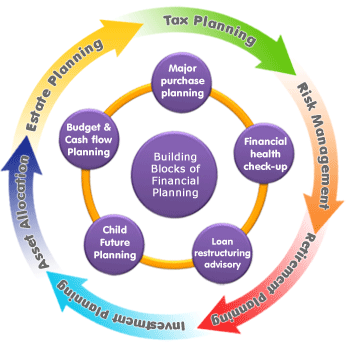
Financial planning is the process of meeting your life goals through the proper management of your finances. Life goals can include buying a home, saving for your child’s education or planning for retirement. The financial planning process involves the following steps:
• Gathering relevant financial information
• Setting life goals
• Examining your current financial status
• Coming up with a financial strategy or plan for how you can meet your goals
• Implementing the financial plan
• Monitoring the success of the financial plan, adjusting it if necessary
Using these steps, you can determine where you are now and what you may need in the future in order to reach your goals.
What isfinancial planning?
What Are the Benefits of Financial Planning?
Financial planning provides direction and meaning to your financial decisions. It allows you to understand how each financial decision you make affects other areas of your finances. For example, buying a particular investment product might help you pay off your mortgage faster, or it might delay your retirement significantly.
By viewing each financial decision as part of a whole, you can consider its short and long-term effects on your life goals. You can also adapt more easily to life changes and feel more secure that your goals are on track.
Can You Do Your Own Financial Planning?
Some personal finance software packages, magazines or self-help books can help you do your own financial planning. However, you may decide to seek help from a professional financial planner if:
• You need expertise you don’t possess in certain areas of your finances. For example, a planner can help you evaluate the level of risk in your investment portfolio or adjust your retirement plan due to changing family circumstances.
• You want to get a professional opinion about the financial plan you developed for yourself.
• You don’t feel you have the time to spare to do your own financial planning.
• You have an immediate need or unexpected life event such as a birth, inheritance or major illness.
• You feel that a professional adviser could help you improve on how you are currently managing your finances.
• You know that you need to improve your current financial situation but don’t know where to start.

Personalfinancial planning Seminar
Financial PlanningTopics
All financial planners volunteering at the Financial Planning Days are highly qualified to discuss a variety of financial topics, and those topics fall in the categories listed below, followed by a set of sample questions related to that topic.
GENERAL FINANCIAL PLANNING
Purchasing a Home – Should I buy or rent? What type of mortgage should I get?
Debt Management – How do I reduce my overall debt?
Building a College Fund – How do I finance my childs college education?
Savings Goals – How much money should I have in my emergency fund?
________________________________________
SPECIAL CIRCUMSTANCES
Job Loss and Job Change – How do I financially plan for a job loss?
Foreclosure Assistance – How can I avoid losing my property to a foreclosure?
Change in Marital Status – How do I financially plan for a divorce?
________________________________________
INVESTMENT PLANNING
Investment Strategies – How do I maximize gains and minimize taxes?
Asset Accumulation – How should I diversify my portfolio, given my risk tolerance?
Generating Investment Income – What investment vehicles should I consider to generate income?
Real Estate - Should I invest in real estate?
________________________________________
RETIREMENT PLANNING
Building a Retirement Fund – What retirement vehicles should I consider when building my nest egg?
401(k) and 403(b) Plans – How do I pick the investments for my 401(k) or 403(b) plan?
IRA Accounts – Should I choose a traditional or Roth IRA?
Social Security – How much will I receive in Social Security benefits when I retire?
________________________________________
INCOME TAX PLANNING
General Tax Return Filing – Should I file my taxes as single or married?
Tax Reduction Strategies – What tax deductions can I take?
Charitable Contributions – How do I maximize the tax advantages of my charitable contributions?
Small Business Taxation – How can I position my small business to minimize my taxes?
________________________________________
ESTATE PLANNING
Building an Inheritance – What estate planning vehicles should I consider when building an inheritance?
Wills and Trusts – Should I set up a will or a living trust?
Estate Tax Strategies – How do I reduce my estate taxes?
Incapacity Planning – How do I appoint a Power of Attorney?
________________________________________
INSURANCE PLANNING
Life Insurance Coverage – How much life insurance do I need?
Disability Insurance – Do I need additional disability insurance?
Long-term Care Planning – What kind of long-term care insurance should I consider?
Property and Casualty Insurance - How should I insure my home?
________________________________________
EMPLOYEE BENEFITS
Managing Health Insurance – Does my family have adequate health insurance?
Health Savings Accounts – Should I open a Health Savings Account (HSA)?
Incentive Stock Option Plans – How is my investment income taxed?
Financial PlanningProcess
FinancialPlanning Process and Benefits
How to make FinancialPlanning Work for you
How to Make Money With Your Opinion : Financial Planning& You