.jpg)
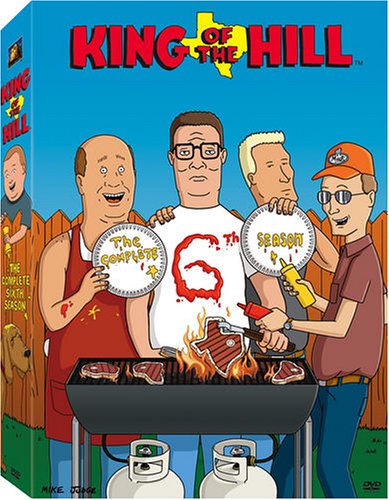
Sitcom star Hank Hill has a lot in common with other TV personalities. His face and voice are well known, he has a loyal fan following, and he occasionally shows up on magazine covers. But unlike other sitcom stars, Hank doesnt require a luxury dressing room, imported bottled water or even air to breathe. Like Fred Flintstone and Homer Simpson before him, Hank is entirely two-dimensional an animated cartoon character.
Hanks show "King of the Hill" is part of a general artistic revolution that has shaken up TV animation over the past 15 years. The sophisticated humor and themes on shows like "King of the Hill," "The Simpsons," and "Family Guy" have demonstrated that animation isnt just for kids, or just for Saturday mornings.
As well see, these shows are fairly sophisticated from a production standpoint as well. It takes a lot of hard work getting each episode from idea to broadcast. In this article, well check in with some of the talented people behind "King of the Hill" to find out how animated TV shows get made.
The Big Picture

The production process for a live action TV show is fairly straightforward. Writers come up with a script, actors perform the script in front of a few cameras and a studio audience, the footage is edited, and the show is ready for broadcast. (This is a simplification, but thats the production process in a nutshell).
Producing an animated television program is a far more laborious process, involving dozens of people working hundreds of hours. In traditional animation, still the standard for animated TV shows, every single frame of an animated show must be drawn by hand. The 20 or so minutes of actual footage that make up a typical half-hour program consists of around 30,000 separate frames.
How To Make an Animated Movie
Typically, a half-hour animated program is the product of a nine-month journey, involving eight major steps:
• writing the script
• the table read
• recording voices and editing the soundtrack
• creating the storyboard
• creating the animatic
• creating the color
• editing the color
• adding sound effects and music
In the next few sections, well look at each step in the process.
Writing the Script

A new season of "King of the Hill" generally kicks off with the team of writers gathering to pitch story ideas. After a lot of collective brainstorming, the team narrows down the possibilities to a final list of stories. The producers then assign each story to specific writer or writing team.
After a writer has prepared a story outline, a few other writers will gather to discuss the story, identify any problems, and brainstorm new jokes.
Unlike writers for live action shows, writers for animated shows dont have to worry much about practical production issues. Dave Krinsky, Executive Producer for "King of the Hill" explains "because you dont have to worry about sets, you can have many locations, so you dont really have to worry too much about the reality of [physical production] when youre writing your scripts." Basically, if a writer can imagine in, it can go in an animated show.

Krinsky also enjoys animation because you can do things with the characters you wouldnt be able to successfully do with real actors. "Weve found that theres a slight distance with animation you dont have with real actors," Krinsky explains. That distance allows them to get away with more, such as an early episode of King of the Hill where Hank Hill was dealing with constipation. "With a cartoon, you can get away with a little more," Krinsky continues, "We can show a lot of naked butts, which, other than NYPD Blue, a lot of shows cant get away with."
Krinsky doesnt see many disadvantages to writing for animation, but he acknowledges there are some tradeoffs. "Theres a definite delayed gratification [to animation], whereas on live TV you get to hear the audience laughing, and you get the feedback right away." The lack of immediate audience response leads the writers and producers to rely on their own comedic instincts to guide them through the process, which necessitates many revisions along the way.
The Animatic and the Color

After the producers approve the completed storyboard, its time to create an animatic. An animatic is a very roughly animated draft, sometimes called a "pencil test." It is almost like a moving storyboard. The animators take the pencil-drawn key drawings and photograph them so that they have a representation of what the final product will look like. Because it isnt fully animated, characters have jerky movements, and their mouths dont always match their voices. The producers use the animatic to make sure the performances and comedic timing really work. This is also the last chance the producers have to make major changes to the direction of the story. After this, any big changes will be a costly and time-consuming proposition.

After the animatic is completed, and all changes have been made, the American animators send their key drawings off to an animation studio in Korea. American TV producers hire Korean firms today because the Korean animation industry has relatively low operation costs and access to a large supply of highly trained artists.
In Korea, the first order of business is "in-betweening." Lets say Hank Hill is flipping a hamburger on his propane grill. The American animators provide several key frames of this action. The first frame would be a drawing of Hank with a spatula under the burger. The next frame would be Hanks arm raised a little bit and the burger in the air. The next frame would have the burger land back on the grill. The Korean animators start out by animating every frame in between each key frame, so that once animated, we see smooth motion.
After the in-betweening stage, its time for the ink and paint stage. The animators trace every frame in ink onto clear acetate transparencies and then paint in the color. As computer technology advances, more shows are doing ink and paint digitally.
When the ink and paint stage is completed, each transparency is laid over the appropriate background image and photographed to create a frame. The developed film is sent back to the United States for the next leg of the process. The finished product is called the color.
Editing

Even with a fully-animated product in hand, the show isnt necessarily finished. There may be mistakes in the color that necessitate retakes, or the producers might be unsatisfied with a joke or a scene.
Animating retakes can be costly, so the editors have found editing tricks to achieve the desired results. "With some creative editing, we can make a lot of changes," says Kenny Micka. "We can repurpose animation to have characters say new lines, or we can use shots from other episodes. Weve actually built entire scenes from various shots from different shows. You cant do that in live action."
This is one of the reasons characters in animated shows usually wear the same outfit week to week. With this consistency, its easier to borrow animation from other scenes and other episodes.
Animation Careers l How to Make Your Own Animated Movie