.jpg)
CASINO WORLD
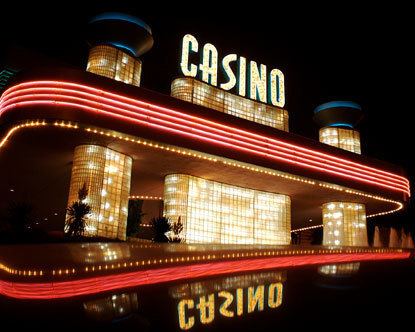
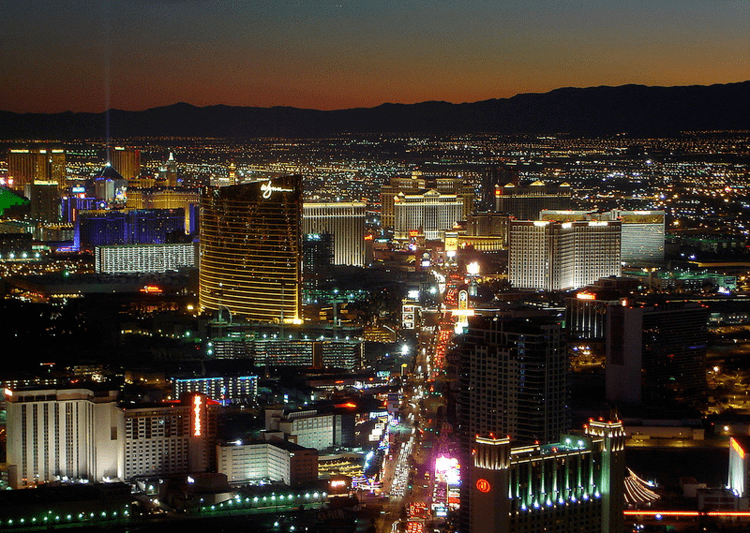
Fig : The Las Vegas Strip is renowned for its high concentration of casino resort hotels
Etymology and usage
The term "Casino" is of Italian origin, the root word being "Casa" (house) and originally meant a small country villa, summerhouse or pavilion. The word changed to refer to a building built for pleasure, usually on the grounds of a larger Italian villa or palazzo. Such buildings were used to host civic town functions – including dancing, music listening, and gambling.
There are examples of such casinos at Villa Giulia and Villa Farnese. In modern day Italian, this term designates a bordello (also called "casa chiusa", literally "closed house"), while the gambling house is spelled casinò with an accent.
During the 19th century, the term "casino" came to include other public buildings where pleasurable activities, including gambling, and sports took place. An example of this type of building is the Newport Casino in Newport, Rhode Island.
Not all casinos were used for gaming. The Copenhagen Casino was a theatre, known for the use made of its hall for mass public meetings during the 1848 Revolution which made Denmark a constitutional monarchy. Until 1937 it was a well-known Danish theatre. The Hanko Casino located in Hanko, Finland - one of that towns most conspicuous landmarks - was never used for gambling. Rather, it was a banquet hall for the Russian nobility which frequented this spa resort in the late 19th century, and is presently used as a restaurant. The Catalina Casino, a famous landmark overlooking Avalon Harbor on Santa Catalina Island, California, has never been used for traditional games of chance, which were already outlawed in California by the time it was built.
In military and non-military usage in Spanish and German, a casino or kasino is an officers mess; curiously, in Italian - the source-language of the word - a "casino" is either a brothel, a mess, or a noisy environment, while a gaming house is called a "casinò". A confusing linguistic false friend for translators.
History of gambling houses

The precise origin of gambling is unknown. It is generally believed that gambling in some form or another has been seen in almost every society in history. From the Ancient Greeks and Romans to Napoleons France and Elizabethan England, much of history is filled with stories of entertainment based on games of chance.
The first known European gambling house, not called a casino although meeting the modern definition, was the Ridotto, established in Venice, Italy in 1638 to provide controlled gambling during the carnival season. It was closed in 1770 as the city government perceived it to impoverish the local gentry.
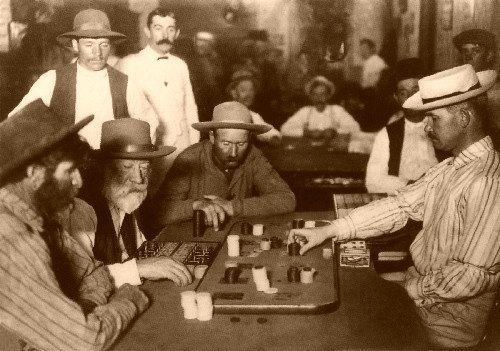
In American history, early gambling establishments were known as saloons. The creation and importance of saloons was greatly influenced by four major cities; New Orleans, St. Louis, Chicago and San Francisco. It was in the saloons that travelers could find people to talk to, drink with, and often gamble with. During the early 20th century in America, gambling became outlawed and banned by state legislation and social reformers of the time. However, in 1931, gambling was legalized throughout the state of Nevada. Americas first legalized casinos were set up in those places. In 1978 New Jersey allowed gambling in Atlantic City, now Americas second largest gambling city.
Gambling in casinos
Most jurisdictions worldwide limit gambling to persons over the age of license (16 to 21 years of age in most countries which permit the operation of casinos).
Customers gamble by playing games of chance, in some cases with an element of skill, such as craps, roulette, baccarat, blackjack, and video poker. Most games played have mathematically-determined odds that ensure the house has at all times an overall advantage over the players. This can be expressed more precisely by the notion of expected value, which is uniformly negative (from the players perspective). This advantage is called the house edge. In games such as poker where players play against each other, the house takes a commission called the rake. Casinos sometimes give out complimentary items to gamblers.
Payout is the percentage of funds ("winnings") returned by players.
Casinos in the USA say that a player staking money won from the casino is playing with house money.
Video Lottery Machines (slot machines) have become one of the most popular form of gambling in casinos. As of 2011 investigative reports have started calling into question whether the modern-day slot-machine is addictive.
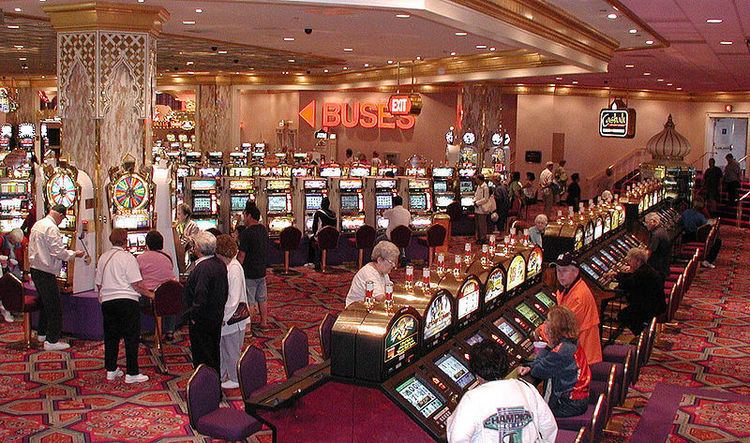
Fig : Slot machines in Atlantic City. Slot machines are a standard attraction of casinos
Design
Casino design - regarded as a psychological exercise - is an intricate process that involves optimising floor plan, décor and atmospherics to encourage consumer gambling.
Factors influencing consumer gambling tendencies include sound, odour and lighting. Natasha Dow Schüll, an anthropologist at the Massachusetts Institute of Technology, highlights the audio directors at Silicon Gaming’s decision to make its slot machines resonate in, “the universally pleasant tone of C, sampling existing casino soundscapes to create a sound that would please but not clash”.
Dr Alan Hirsch, founder of the Smell & Taste Treatment and Research Foundation in Chicago, studied the impact of certain scents on gamblers, discerning that a pleasant albeit unidentifiable odour released by Las Vegas slots machines generated approximately 50% more in daily revenue. He suggested that the scent acted as an aphrodisiac, facilitating a more aggressive form of gambling.
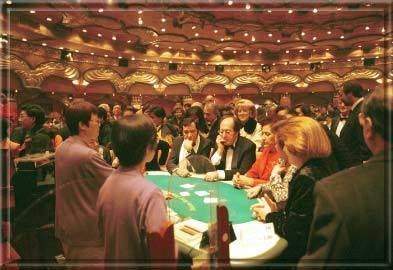
Casino designer Roger Thomas is credited with implementing a successful, disruptive design for the Las Vegas Wynn Resorts’ casinos in 2008. He broke casino design convention by introducing natural sunlight and flora to appeal to a female demographic. Thomas inserted skylights and antique clocks, defying the commonplace notion that a casino should be a timeless space.
Fig : The Casino Royale Hotel & Casino in Las Vegas